
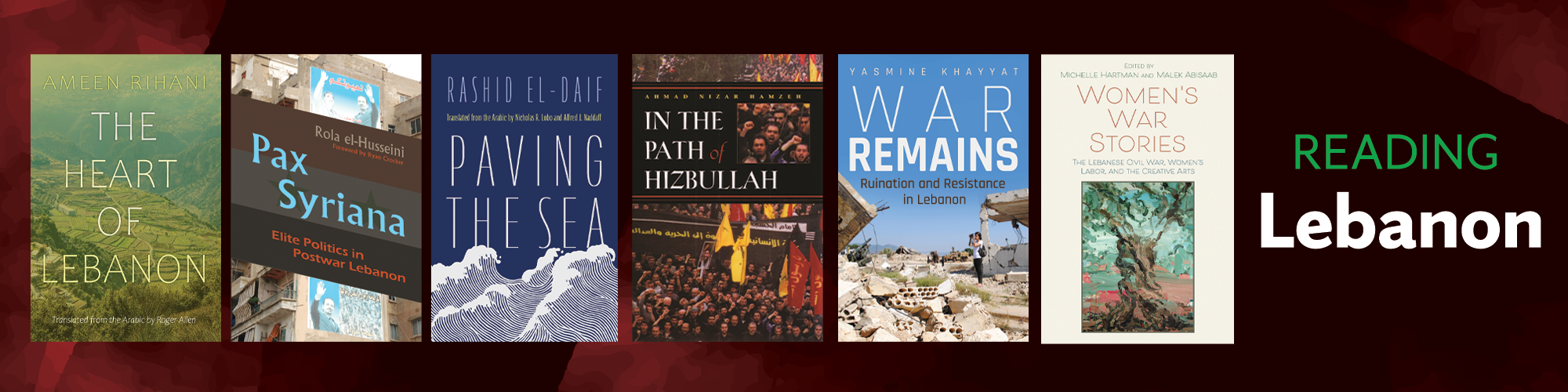
In consideration of current events, we have put together a list of books on Lebanon that we hope provides context and provokes careful thought.
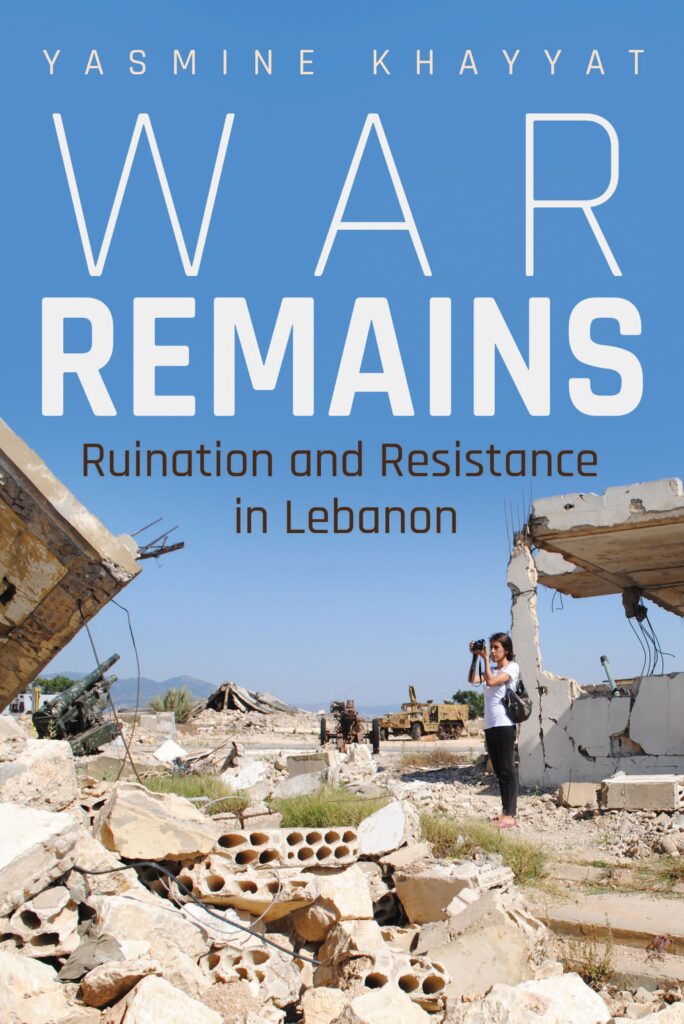
War Remains traces the poetics of ruination and resistance in select contemporary Lebanese wartime literature, cultural production, and sites of memory. Drawing upon work from southern Lebanon and Beirut, author Yasmine Khayyat examines how war remains are employed as a resistant trope in the intellectual spaces of war’s aftermath. She focuses on “Southern Counterpublics,” a collective of poets, novelists, activists, artists, and ordinary citizens and their war-inspired creative productions that speak to the ruins’ capacity to be reframed, recycled, and recontested. Khayyat argues that the ruins of war can be thought of as a generative milieu for resistant thought and action. An ambitious and provocative work, War Remains ventures to the so-called margins to archive the texture and substance rendered invisible when studies of memory rely solely on data furnished by official narratives and military accounts of war.
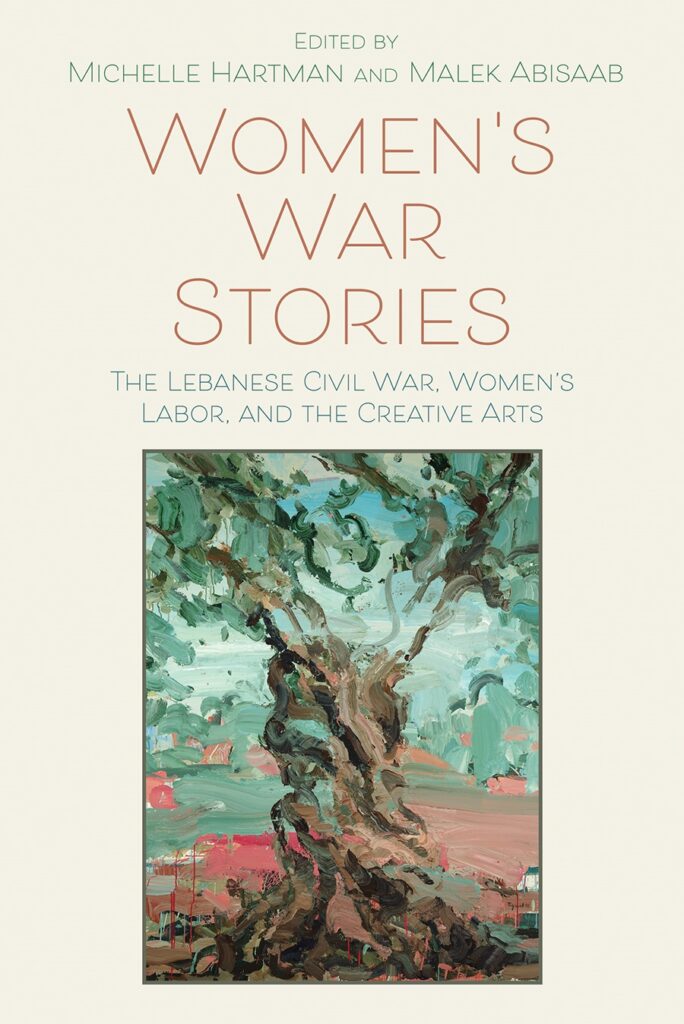
Women have consistently been left out of the official writing of Lebanese history, and nowhere is this more obvious than in writing on the Lebanese Civil War. As more and more histories of the war begin to circulate, few include any in-depth discussion of the multiple roles women played in wartime Lebanon. Fewer still address the essential issues of women’s work and their creative production, such as literature, performance art, and filmmaking. Developed out of a larger oral history project collecting and archiving the ways in which women narrated their experiences of the Lebanese Civil War, Women’s War Stories focuses on a wide range of subjects, all framed as women telling their “war stories.” Each of the six chapters centers on women who worked or created art during the war, revealing, in their own words, the challenges, struggles, and resistance they faced during this tumultuous period of Lebanese history.
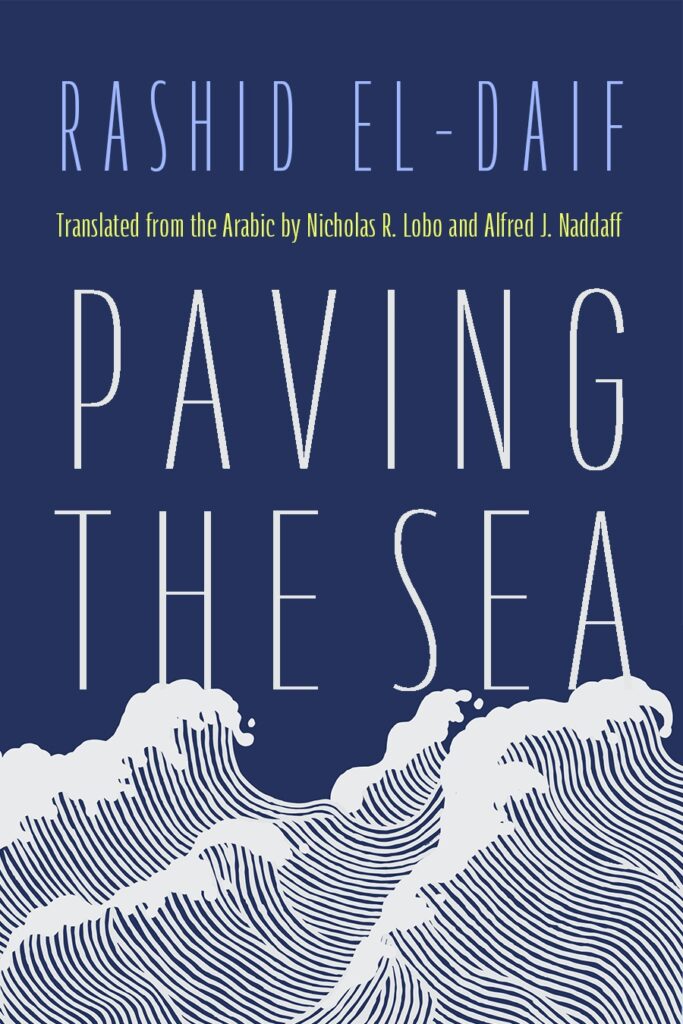
What does it take to build a modern nation—and what happens when that project fails? By turns wryly absurd, unsettling, and deeply moving, Rashid El-Daif’s novel Paving the Sea narrates a quest for the impossible and the disillusionment with the transformative promises of the nation. At the center of the story is Jurji Zaidan, the real-life intellectual giant of the Arab Nahda, the cultural renaissance that sought to remake the Arabic-speaking world through modern science and secular thought. Zaidan and his fictionalized friend Fares Hashem attend university where the two young idealists campaign to bring Darwin’s theory of natural selection into the curriculum. When their reward is expulsion, they depart provincial Mount Lebanon and Fares sets out for the West with grand ambitions. But the pursuit of enlightenment proves far more complicated than either imagined. The book is available for preorder now and will be released this October.
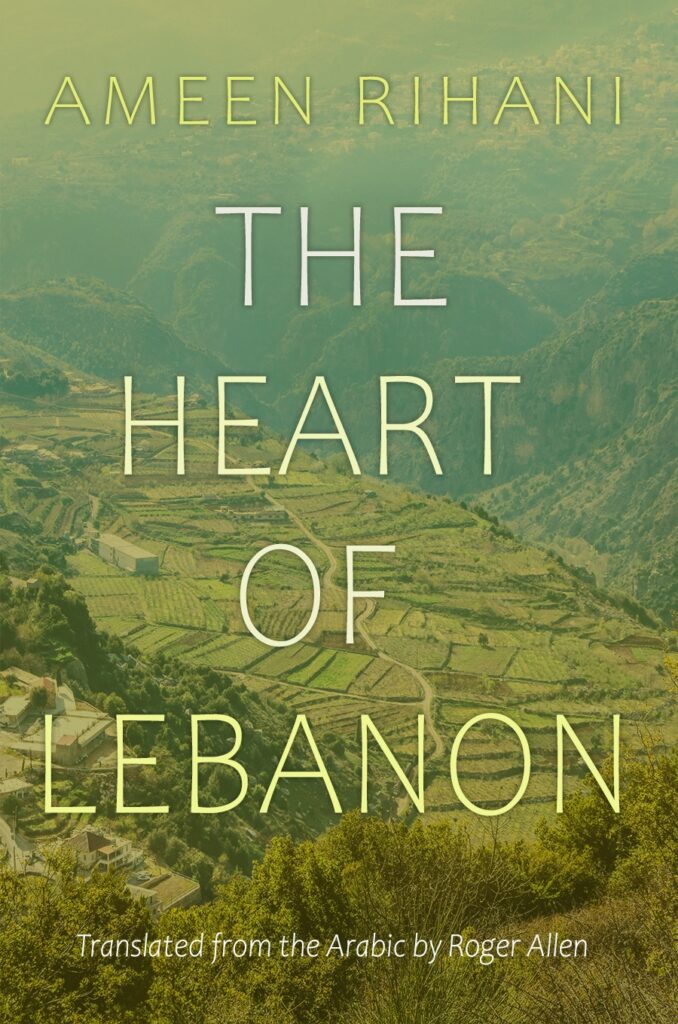
Through his travelogue The Heart of Lebanon, celebrated mahjar writer Ameen Rihani brings his readers along by foot and by mule to explore rural villages like his childhood home of Freike, the flora and fauna of massive cedar forests, and archaeological sites that reveal the history of Lebanon. Meeting goatherds, healers, monks, and more along the way, Rihani offers more than vivid descriptions of the country’s sweeping scenery. His candid and often humorous narration captures what he sees as the soul of Lebanon and its people. Allen’s fluid translation transports English-language readers to an early twentieth-century rural Lebanon of the writer’s time in a way that only Rihani’s firsthand account can accomplish.
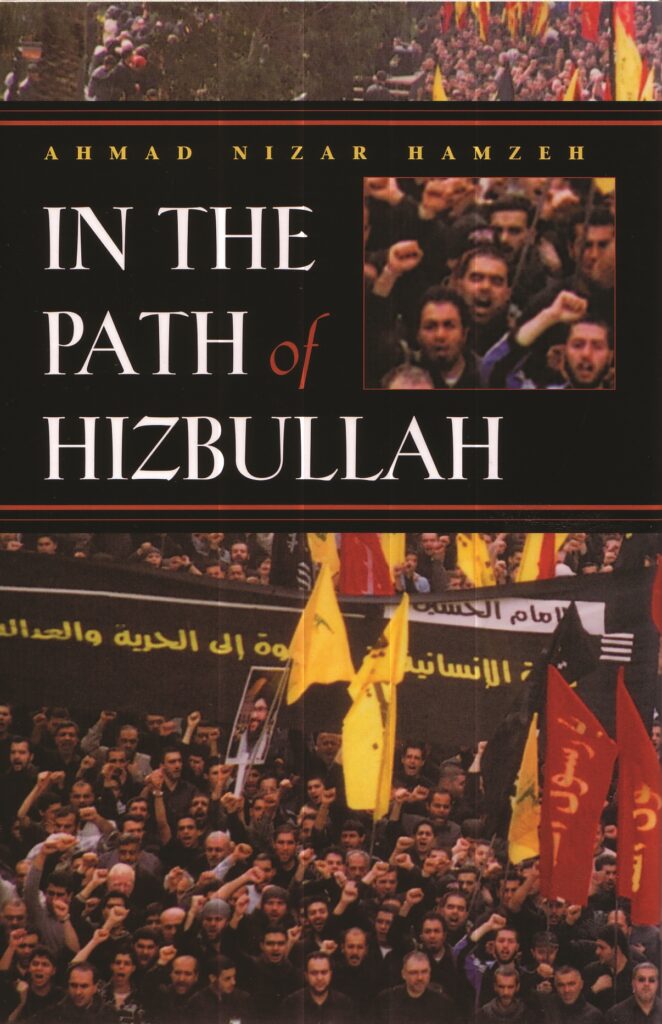
Of the many Islamist groups that have emerged within the Muslim world over the last two decades, perhaps none has had so great an impact on Middle Eastern and International affairs as Hizbullah, the Party of God. This group of mainly Lebanese Shìte Muslims gained both infamy and fame by its resort to militancy mixed with political pragmatism in the pursuit of its goals. The oscillation between these two extremes has left most scholars and policymakers perplexed. In the Path of Hizbullah serves as a pathway for understanding not only Hizbullah but also for other Islamist groups and their challenges to contemporary politics. Author Ahmad Nizar Hamzeh examines the Hizbullah of Lebanon through a structural analysis using original and archival sources.
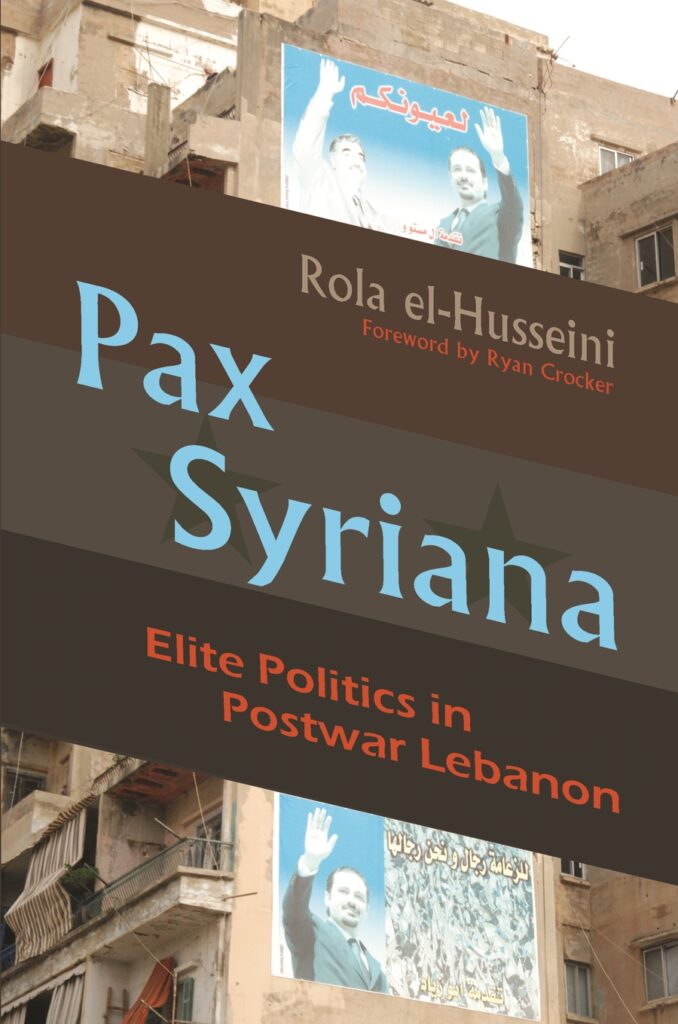
The recent political history of Lebanon has been defined by the legacy of war. In addition to repeated external invasions and the ongoing presence of foreign troops of diverse nationalities, the Lebanese people have endured the scars left by a bitterly contested civil war that began in the spring of 1975 and continued unabated for the next fifteen years. While much has been written about the tragedy of the civil war, author Rola el-Husseini’s Pax Syriana is the first book focused on the evolution of the postwar political scene. In a series of negotiations brokered by Saudi Arabia, under the auspices of the larger international community, the civil war came to an end with the signing of the Ta’if Agreement. This agreement ushered in an era of Syrian control and rule by a disparate group of power elites. El-Husseini provides an in-depth account of how the political elite left an indelible mark on the Lebanese state and society
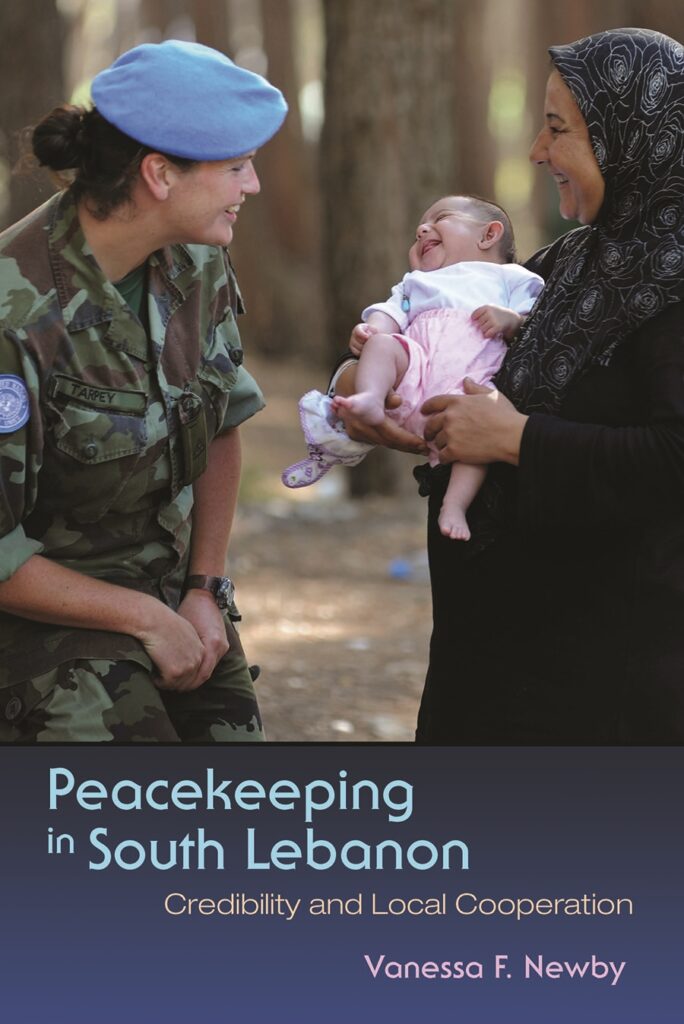
Although the concept of credibility has been identified by the United Nations as a significant factor in successful peacekeeping operations, its role has largely been ignored in the literature on peacekeeping at the local level. In Peacekeeping in South Lebanon, author Vanessa F. Newby provides the first detailed examination of credibility’s essential place in peacekeeping. With empirically rich analysis, Newby explores the United Nations Interim Force in Lebanon (UNIFIL) and its navigation of political tensions in one of the world’s geopolitical flashpoints, a place where the mission’s work is constrained by weak local legitimacy born of a complex political situation. Identifying four types of credibility—technical, material, security, and responsiveness—Newby traces the ways in which building credibility served UNIFIL and has enabled the mission to exercise its mandate despite significant challenges on the ground. Peacekeeping in South Lebanon unpacks the day-to-day business of running a peace mission and argues that credibility should be regarded as an independent construct when considering how a peacekeeping operation functions and survives.