
October is New York History Month, highlighting the role of public historians in the state as well as the work of preserving New York’s unique history. At Syracuse University Press, we’ve long published on the state and the region’s history and are offering a reading list on the subject to celebrate.
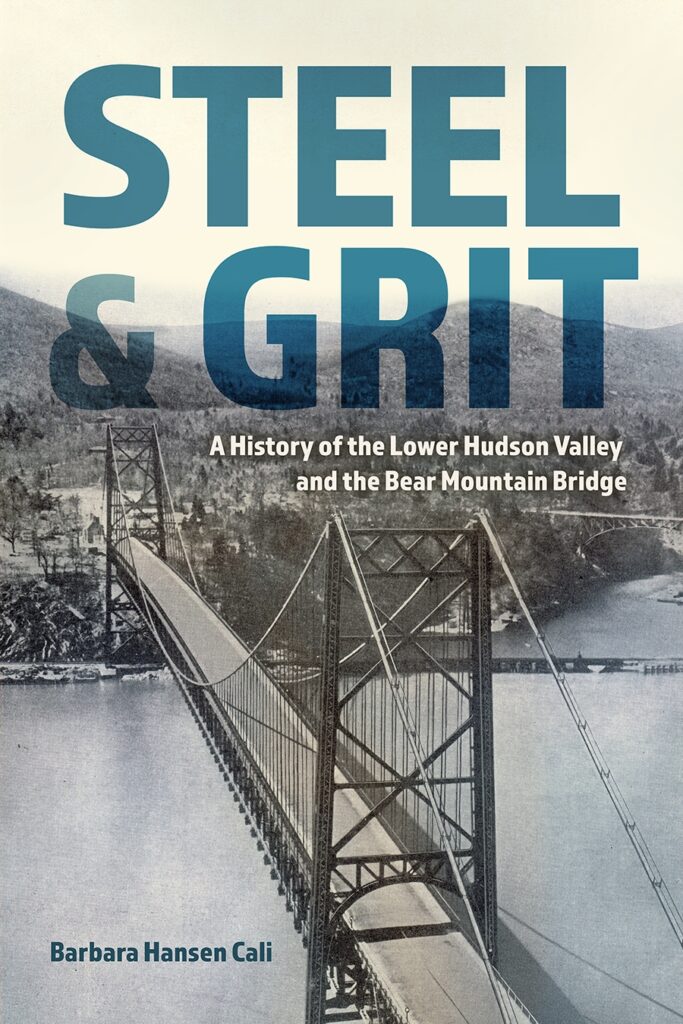
Straddling the Hudson where the river begins to narrow and twist in its journey, the Bear Mountain Bridge stands as an elegant memorial to the shifting industrial culture of the United States between the two world wars. Once the longest suspension bridge in the world and meant to serve as a necessary industrial connector while preserving the region’s scenic beauty, the Bear Mountain Bridge was a titanic undertaking that dramatically reshaped the Hudson Valley. Steel and Grit (available for preorder now) chronicles the story of the valley at a moment of great change. Drawing on a trove of archival materials, Barbara Hansen Cali traces the Bear Mountain Bridge’s construction, from the selection of the land to the role of Gilded Age icons, such as E. H. Harriman and financier J. P. Morgan, the formation of the Palisades Interstate Park Commission, and the New Jersey women’s clubs that were pivotal to the final legislative efforts. Steel and Grit examines the importance of the Bear Mountain Bridge, both as a symbol of twentieth-century American ingenuity and as an enduring symbol of the Hudson Valley.
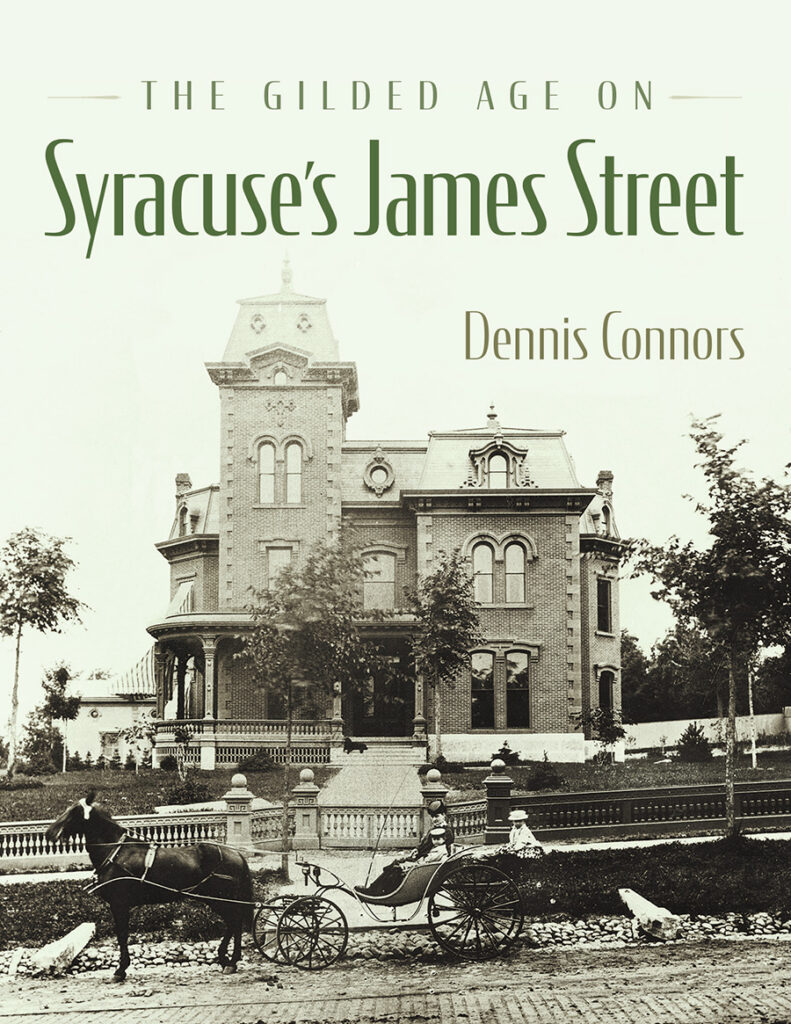
From the 1890s to 1930s, stately mansions lined Syracuse’s James Street, their elegant gardens, architecture, and streetscapes a point of city-wide pride. The Gilded Age on Syracuse’s James Street combines newly published photographs with histories of the mansions and people that once occupied Syracuse’s most fashionable street. More than just beautiful facades, the mansions and people who inhabited them represented the cultural life, political leadership, industrial growth, and social reform that animated Syracuse and the nation during this period of opulence. Drawing on photos and rich archival material from the Onondaga Historical Association, Dennis Connors assembles an architectural and social history of Gilded Age James Street. These ornate homes were widely admired, drawing visits from Ulysses S. Grant and literary giant Henry James, but by the 1940s, many of the homes were demolished to accommodate post–World War II urban development.
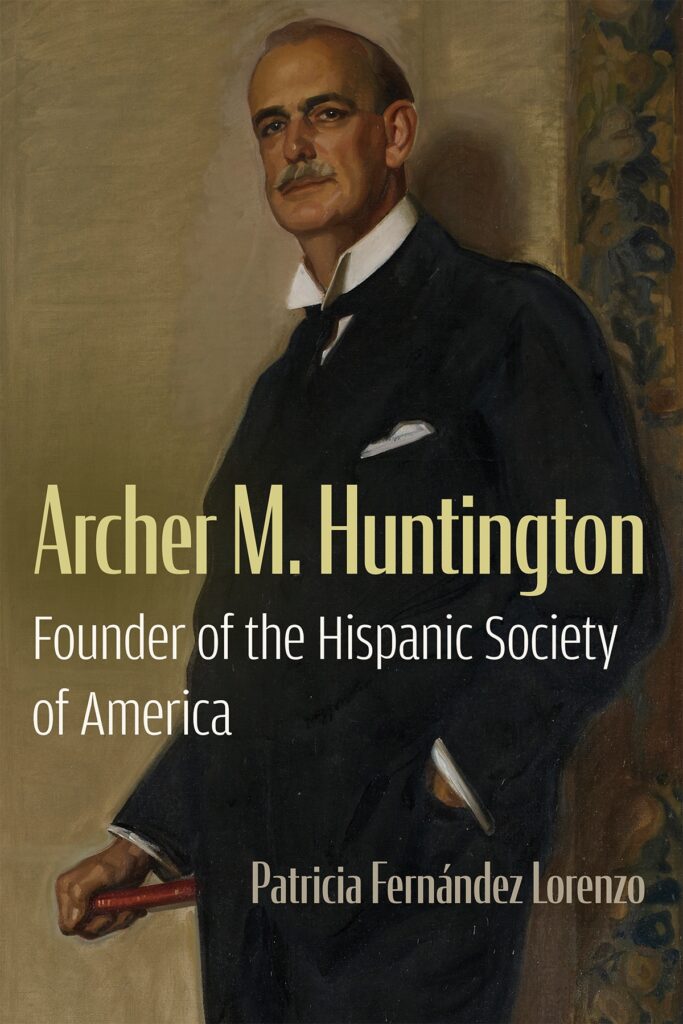
In Archer M. Huntington: Founder of the Hispanic Society of America, Patricia Fernández Lorenzo offers, for the first time in English, a complete biography of Huntington, tracing his enthusiasm for Spain and the arts from his childhood, to his marriage to sculptor Anna Hyatt and his crisis of conscience in the wake of the violence of the Spanish Civil War. Drawing heavily from Archer’s correspondence and from Anna Hyatt Huntington’s papers, housed at Syracuse University, Fernández Lorenzo offers a full, deeply human portrait of one of the great patrons of Spanish art, giving a comprehensive look at Huntington’s role in defining Hispanicism in the United States.
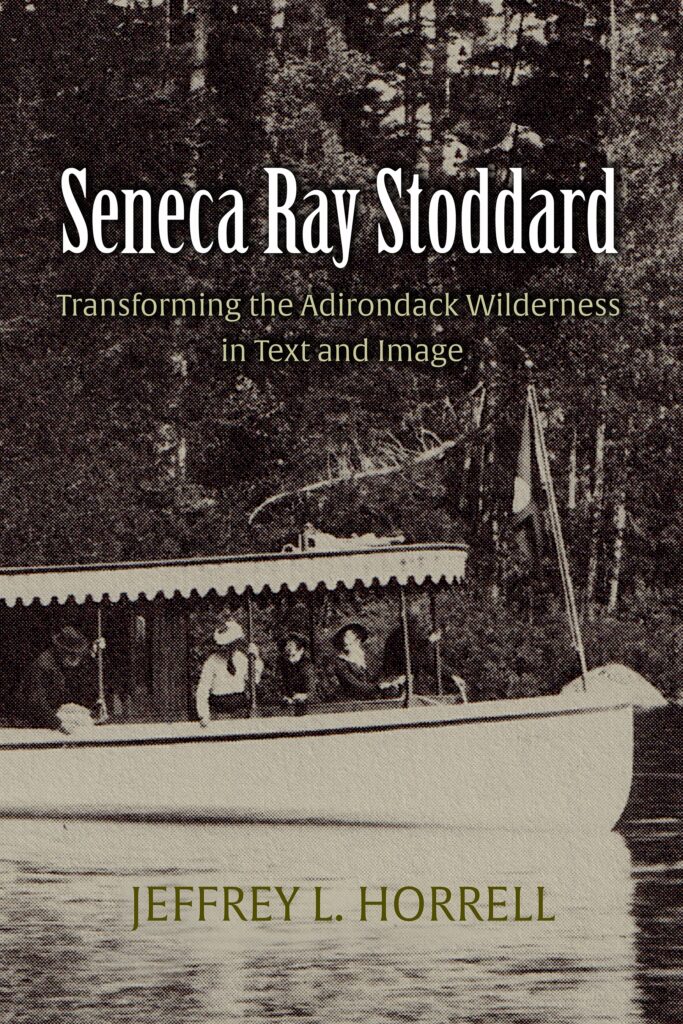
Seneca Ray Stoddard’s photographic and literary work paralleled the era of exploration of this region as well as the early years of photography. It was during his lifetime—as a result of the changing perceptions of the wilderness—that the area first attracted artists, tourists, and summer residents. Jeffrey L. Horrell’s book, Seneca Ray Stoddard: Transforming the Adirondack Wilderness in Text and Image, explores the nature of this Adirondack pioneer’s work and examines how it influenced and was influenced by the changing attitudes toward wilderness in the last half of the nineteenth century. It is the first complete volume to provide an in-depth study of both Stoddard’s writing and photography. Through his photographs and publishing ventures, Stoddard moved from recording the wilderness landscape to defending it against the logging industry and other developers.
Too often, the lives and works of authors who called Upstate New York home are overshadowed by the icons of New York City. Resting among Us uncovers the region’s rich literary heritage through author Steven Huff’s journeys to the graves of writers both famous and celebrated as well as those that have been forgotten. While most Upstate residents are aware that Mark Twain’s grave is in Elmira and that James Fenimore Cooper’s is in Cooperstown, many people don’t realize a noted author may be buried in their local cemetery. For instance, Paul Bowles is buried in Lakemont, John Gardner in Batavia, Rod Serling in Interlaken, John Burroughs in Roxbury, and Adelaide Crapsey in Rochester. Interwoven with these remarkable literary lives are the connected stories of the region’s history and Huff’s own encounters and friendships with some of the writers included in the book. With directions to each author’s grave, as well as photographs of the graves and authors themselves, Resting among Us is the perfect companion for your own enlightening literary pilgrimage.
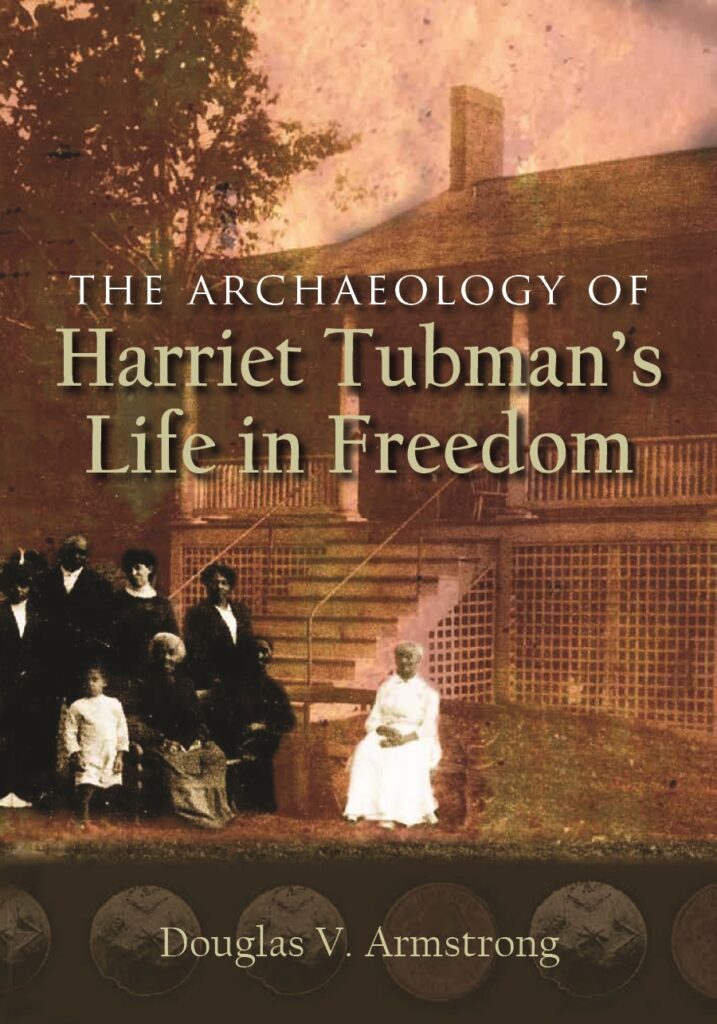
Harriet Tubman’s social activism as well as her efforts as a soldier, nurse, and spy have been retold in countless books and films and have justly elevated her to iconic status in American history. Given her fame and contributions, it is surprising how little is known of her later years and her continued efforts for social justice, women’s rights, and care for the elderly. Tubman housed and cared for her extended family, parents, brothers, sisters, nieces, and nephews, as well as many other African Americans seeking refuge. Ultimately her house just outside of Auburn, New York, would become a focal point of Tubman’s expanded efforts to provide care to those who came to her seeking shelter and support, in the form of the Harriet Tubman Home for the Aged. In The Archaeology of Harriet Tubman’s Life in Freedom, author Douglas V. Armstrong reconstructs and interprets Tubman’s public and private life in freedom through integrating his archaeological findings with historical research. The material record Tubman left behind sheds vital light on her life and the ways in which she interacted with local and national communities, giving readers a fuller understanding of her impact on the lives of African Americans. Armstrong’s research is part of a wider effort to enhance public interpretation and engagement with the Harriet Tubman Home.