
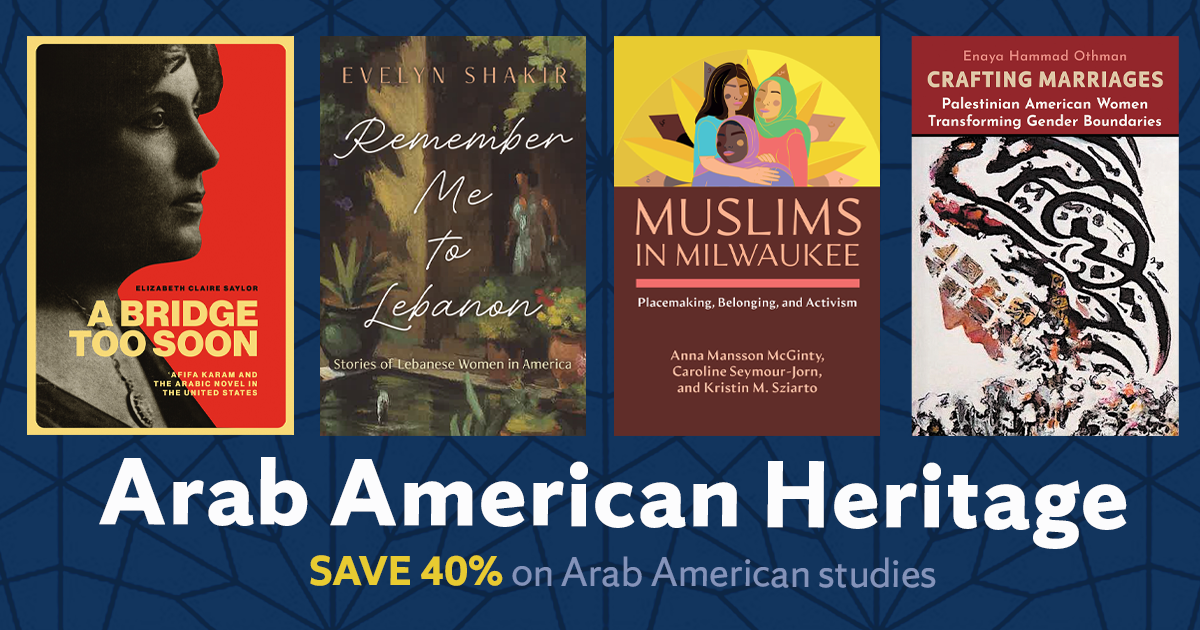
April marks Arab American Heritage month, a time to celebrate culture and the Arab American figures who have made an impact on American life. Syracuse University Press has long published on a wide range of Middle Eastern studies and has covered the intersection with American studies and contemporary life across decades of books. Below are some of the most recent titles on the subject, all available with the rest of the books on the subject, for 40% off during our Arab American Heritage Month sale.
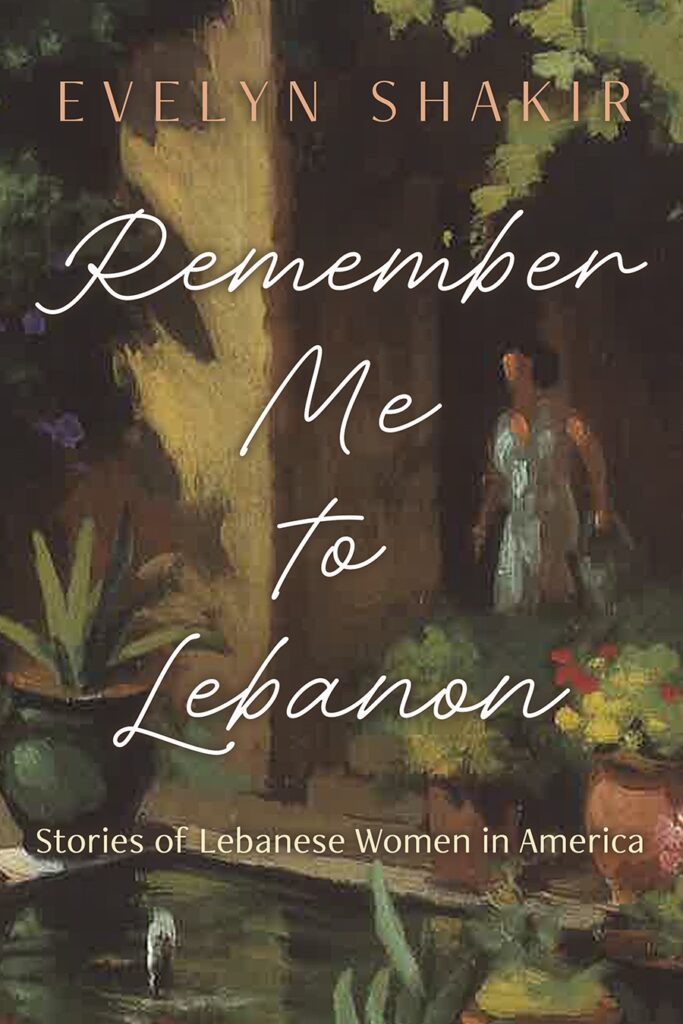
Remember Me to Lebanon tells stories of different generations of Lebanese women in America, examining life from the 1960s to the present. The stories include generational hauntings, modern matchmakers, post-9/11 paranoia, and the constant tug between tradition and contemporary mores, with author Evelyn Shakir offering multiple perspectives on how Lebanese women change roles in a new landscape without surrendering cultural identity. The book was the Winner of the Arab American National Book Award for Fiction.
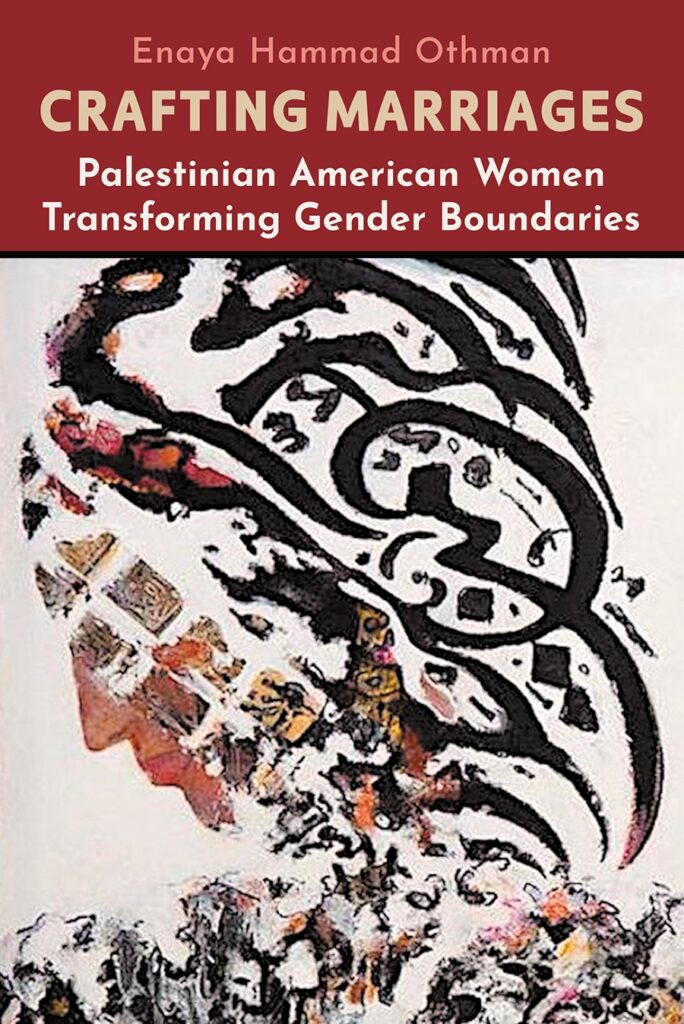
In Crafting Marriages: Palestinian American Women Transforming Gender Boundaries, Enaya Othman draws on three decades of ethnographic research to chart how Palestinian women have reimagined and reshaped marriage practices across generations. Through careful analysis of over sixty personal narratives, family documents, and marriage videos, Othman reveals how these women have become key agents of cultural change, negotiating between traditional expectations and contemporary possibilities. Her research highlights the complexity of Palestinian American marriages, shaped by the dynamic interplay of religious identity, cultural heritage, and modern American life.
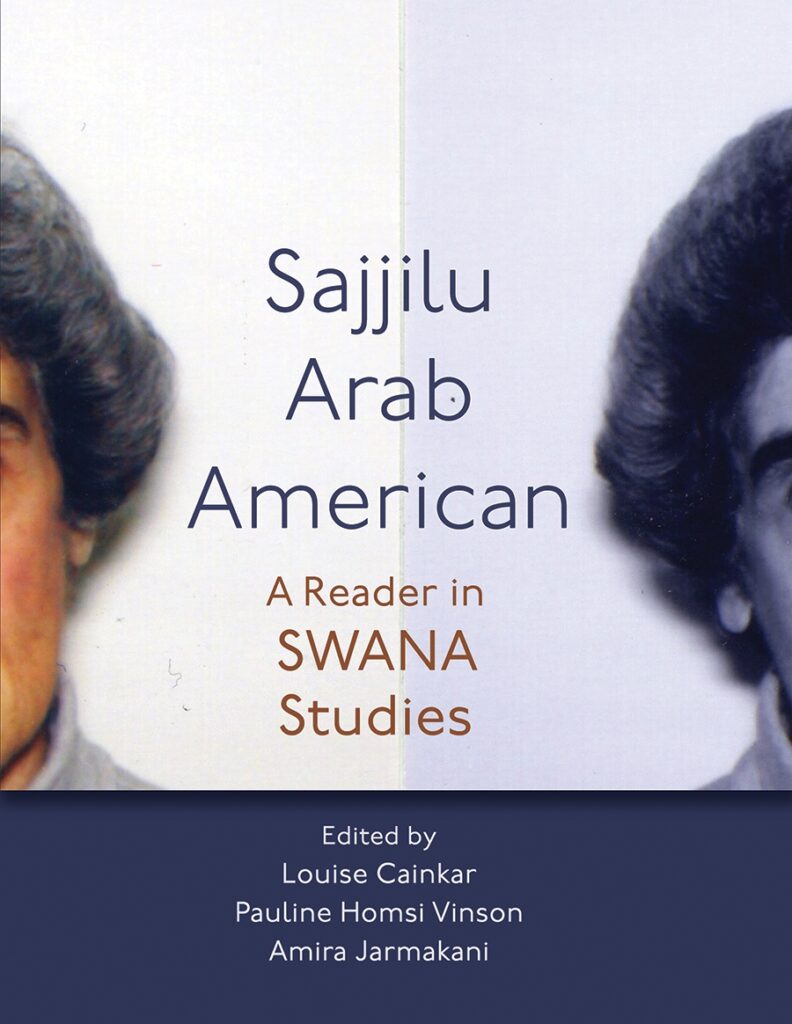
Both a summative description of the field and an exploration of new directions, Sajjilu Arab American addresses issues central to the fields of Arab American, US Muslim, and Southwest Asian and North African (SWANA) American studies. Taking a broad conception of the Americas, this collection simultaneously registers and critically reflects upon major themes in the field, including diaspora, migration, empire, race and racialization, securitization, and global South solidarity. The collection will be essential reading for scholars in Arab/SWANA American studies, Asian American studies, and race, ethnicity, and Indigenous studies, now and well into the future.
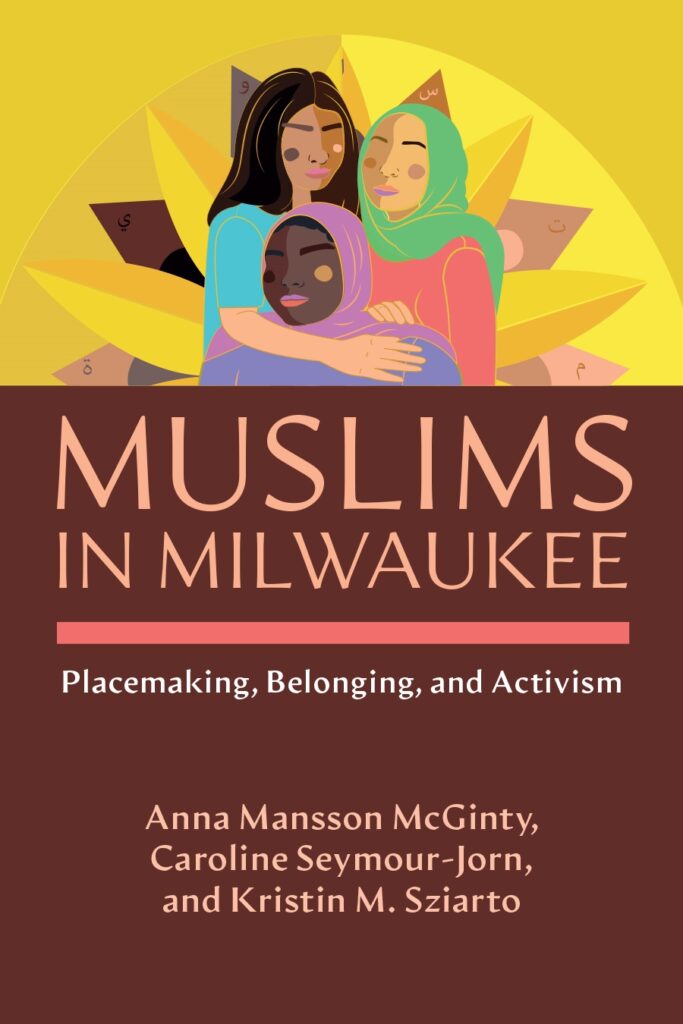
Muslims in Milwaukee explores the everyday lives, identities, and activism of Muslims in a midsized Midwestern city. Milwaukee is one of America’s most segregated cities, yet within its boundaries, a vibrant Muslim community is reshaping narratives and embodied practices of belonging, civic engagement, and urban placemaking. While considerable scholarship on Muslim Americans has concentrated on larger metropolitan centers like New York, Los Angeles, and Chicago, or on Detroit’s historic Arab neighborhoods, this book turns our attention to an understudied city where Muslim communities are small but rapidly growing, and where their experiences unfold within distinct local landscapes of race, segregation, and opportunity.
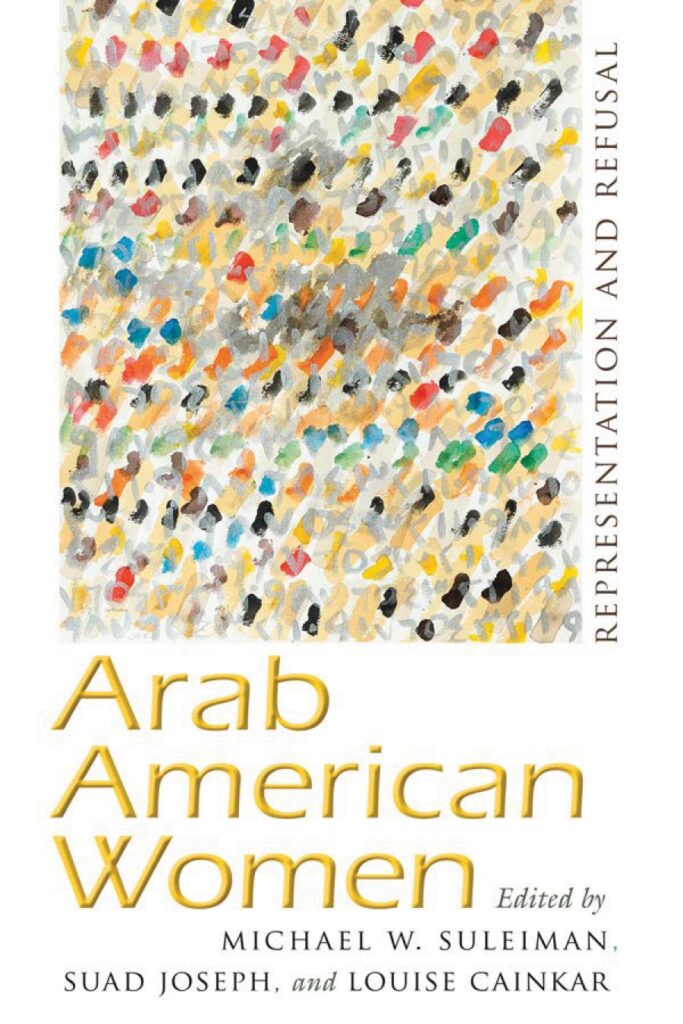
Arab American women have played an essential role in shaping their homes, their communities, and their country for centuries. Their contributions, often marginalized academically and culturally, are receiving long- overdue attention with the emerging interdisciplinary field of Arab American women’s studies. The collected essays in Arab American Women capture the history and significance of Arab American women, addressing issues of migration, transformation, and reformation as these women invented occupations, politics, philosophies, scholarship, literature, arts, and, ultimately, themselves. Arab American women brought culture and absorbed culture; they brought relationships and created relationships; they brought skills and talents and developed skills and talents. They resisted inequities, refused compliance, and challenged representation. They engaged in politics, civil society, the arts, education, the market, and business. And they told their own stories. These histories, these genealogies, these narrations that are so much a part of the American experiment are chronicled in this volume, providing an indispensable resource for scholars and activists.