
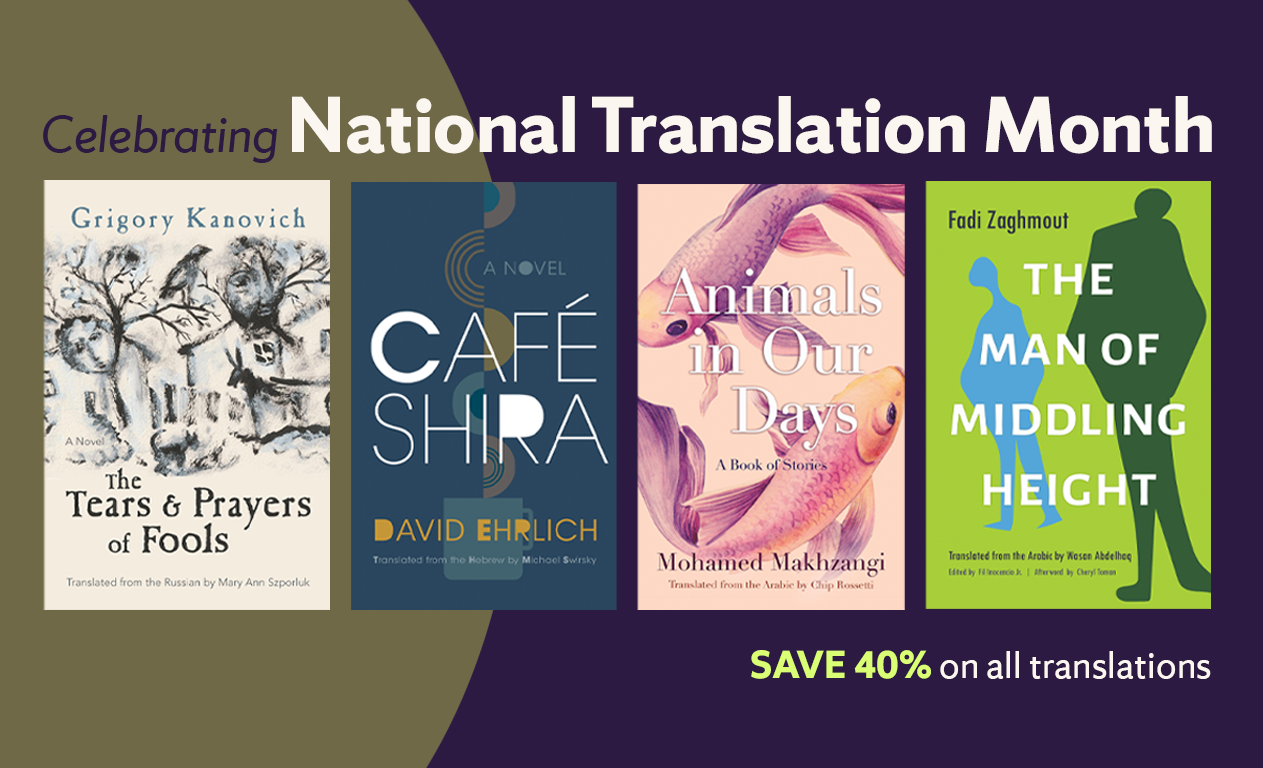
September is National Translation Month, a time to celebrate the work on writers around the world, as well as translators working to make literature accessible for readers wherever they may be. Syracuse University Press has long worked to publish translated literature, poetry and work from around the world, as part of our Middle East Literature in Translation, Judaic Traditions in Literature, Music, and Art, and other series. During the month of September, we’re offering 40% off all of our work in translation, with some selections from the sale available below.

The Man of Middling Height follows a short dressmaker whose life is upended when she meets Tallan, a man whose middle height places him outside the rigid tall/short binary that governs their society. As their forbidden romance blossoms, they must navigate a world where height determines everything from social status to romantic possibilities. Through their story and those of surrounding characters—including a short person in a polyamorous relationship with two tall partners, and a tall activist who scandalously loves another tall person—author Fadi Zaghmout, translated by Wasan Abdelhaq, deftly reframes contemporary discussions about gender identity and sexuality through the lens of height discrimination.
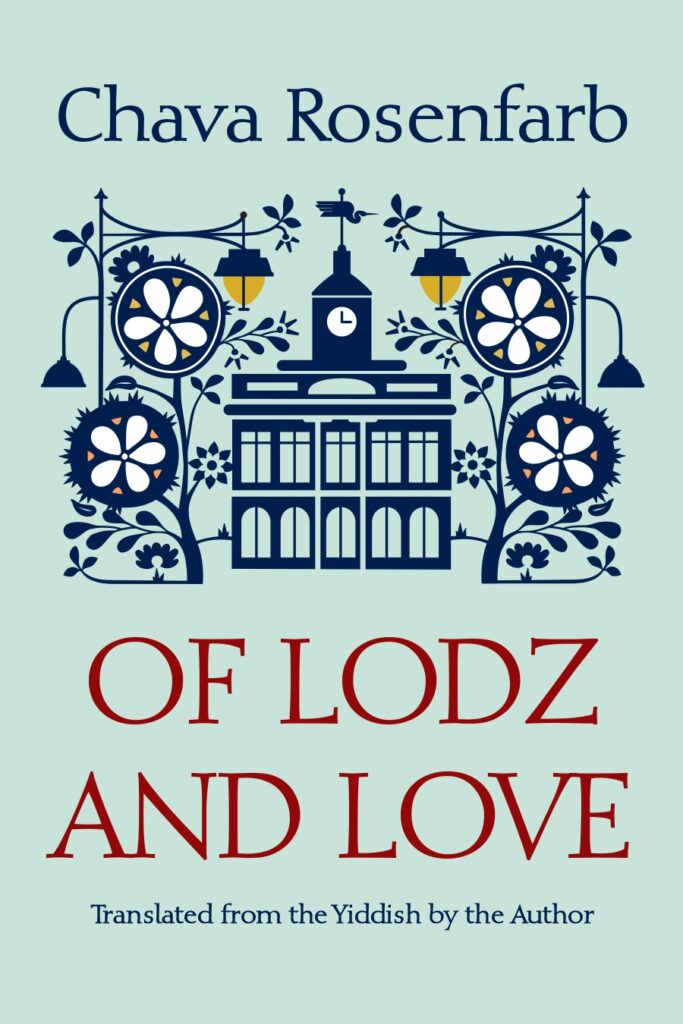
In Of Lodz and Love, writer and translator Chava Rosenfarb revisits her themes of the shtetl and pre-Holocaust Poland, of economic and political oppression, and of the upheavals that would herald a new Jewish national and political awakening. The story takes Yacov, son of Hindele, and Binele, the daughter of the chalk vendor Yossele Abedale, to the industrial town of Lodz during the first years of Poland’s independence, both before and after the country entered the war with the Bolsheviks.
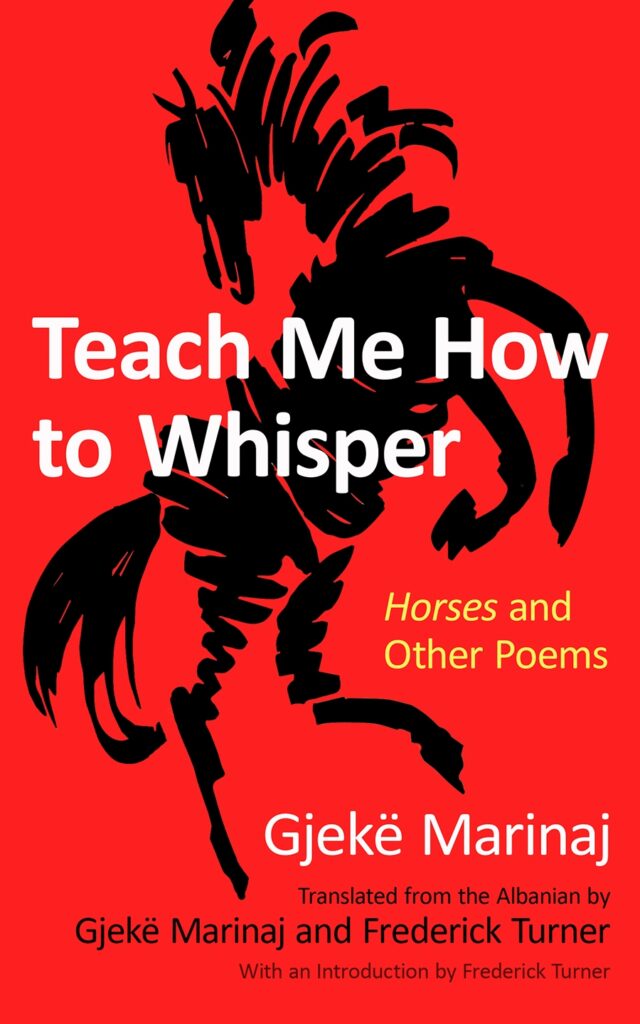
The works of Gjekë Marinaj, Albania’s leading poet, have been praised, translated, published, and discussed in over twenty languages and countries. His most celebrated poem, “Horses,” drew the attention of the dictatorship’s censors when it was published and forced Marinaj to escape his country. Later, the poem became the anthem for the democratic forces that freed the country. He has won several of the world’s most prestigious prizes for his poetry and criticism, but his remarkable body of passionate, profound, and wildly original poetry is only now translated and published in English for the first time. With Teach Me How to Whisper, Frederick Turner, a prizewinning Anglo-American poet, critic, and translator, has translated this generous collection of Marinaj’s major poems into English with the close collaboration of the poet himself. Gathered into nine sections—Home, Albania, Amor, Admonitions, Acheron, Heroines, Metaphysics, Poets, and The Earth—the volume concludes with an extraordinary, long poem, “The Lost Layers of Vyasa’s Skin.” With his fascinating introductory essay, Turner contextualizes Marinaj’s work, describing the ways Albanian history, culture, and politics have energized Marinaj’s poetry and its poetics.
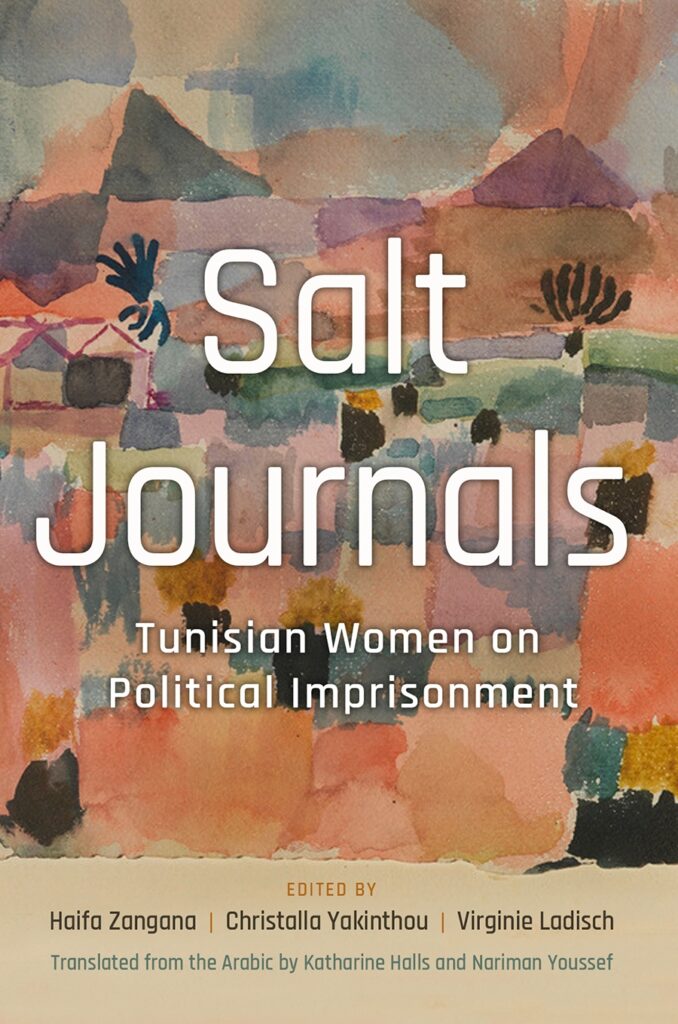
Salt Journals is a compelling collection of essays by Tunisian women, sharing their personal experiences with dictatorship and oppression. While rooted in the history and culture of Tunisia, these narratives reflect universal feelings of isolation, pain, and the indomitable quest for freedom. Drawn from a variety of different professions, including a lawyer, an engineer, a nurse, a student, and a city council member, among others, these women are contesting the culture of silence surrounding women’s prison narratives. Employing words as their weapons of nonviolent resistance, the authors recount the harsh realities of a militarized state and its oppressive prison system. The book, edited by Haifa Zangana, Christalla Yakinthou, and Virginie Ladisch and translated from the Arabic by Katharine Halls and Nariman Youssef, is a testament to the power of self-representation, opening a vital space for dialogue on empathy, resilience, and the importance of speaking out in the face of tyranny.
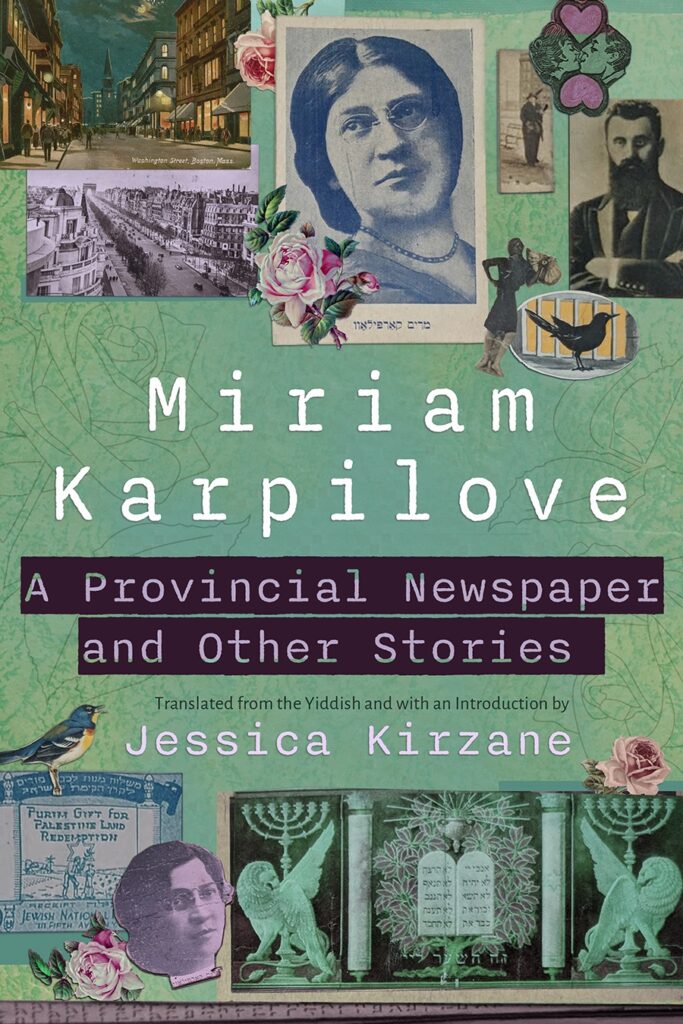
When the young narrator of Miriam Karpilove’s A Provincial Newspaper leaves New York to work for a new Yiddish newspaper in Massachusetts, she expects to be treated with respect as a professional writer. Instead, she finds herself underpaid and overworked. In this slapstick novella, Karpilove’s narrator lampoons the gaggle of blundering publishers and editors who put her through the ringer and spit her back out again. Along with the titular novella are a host of Karpilove’s short stories, translated from the Yiddish by Jessica Kirzane.