
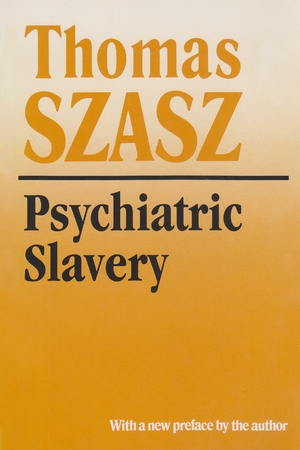
"In a short, powerfully written book, Dr. Szasz takes aim once more at conventional psychiatry, which labels individuals 'mentally ill,' and at the attendant system of courts, hospitals, and psychiatrists who confine patients against their will . . . [He] has put the American psychiatric and legal establishments on trial, with disturbing results. He investigates abuses in diagnostic methods, electroshock 'therapy' and the judicial apparatus . . . Essential reading for those concerned with the care of the emotionally disturbed and the moral dilemmas of psychiatry."—Publishers Weekly
Description
In Psychiatric Slavery, Dr. Thomas Szasz delivers a powerful indictment of coercive mental health practices and their close ties to the American legal system. Challenging the widely held belief that the landmark Supreme Court case O’Connor v. Donaldson marked a victory for civil liberties, Szasz argues that it instead legitimized the state’s power to confine individuals under the guise of psychiatric care.
Through rigorous analysis, Szasz reveals how courts, hospitals, and mental health professionals collaborate to strip citizens of autonomy, turning psychiatry into a tool of social control. At the heart of this work is the chilling story of Kenneth Donaldson, who was involuntarily committed to a Florida asylum for 14 years without meaningful treatment.
Provocative and uncompromising, Psychiatric Slavery forces readers to confront unsettling questions about freedom, justice, and the moral foundations of involuntary hospitalization.
Table of Contents
Preface
Preface to the Original Edition
1. Justifying the Unjustifiable
2. The Case of Kenneth Donaldson
3. The Brief for Donaldson
4. The Brief for O'Connor
5. The Brief for the American Psychiatric Association
6. The Supreme Court's Decison in O'Connor v. Donaldson
7. Interpretations of the Supreme Court's Donaldson Decision
8. A Right to Treatment or a Right to Treat?
9. Chattel Slavery and Psychiatric Slavery
Notes
Index
About the Author
Thomas Szasz is the author of over six hundred articles and twenty-four books. He was a practicing psychiatrist and is a professor of psychiatry emeritus at the State University of New York Upstate Medical University in Syracuse, New York.
5.5 x 8.25, 188 pages
April 1998