
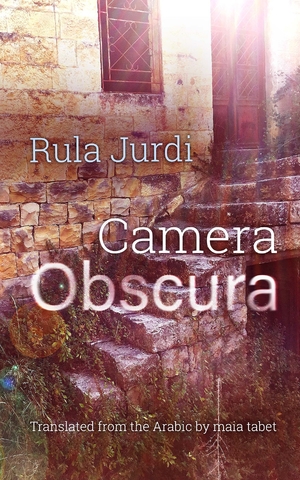
"A tour de force of storytelling made all the more engrossing by a fluid text that flows effortlessly across borders to speak of transnational lives that are simultaneously grounded in intensely intimate local moments captured by camera and narrator."—Akram Khater, director, Khayrallah Center for Lebanese Diaspora Studies, North Carolina State University
"Jurdi’s intelligent, expansive, and erudite style comes alive in maia tabet’s elegant English translation. Set in the Druze mountains of Lebanon, Camera Obscura explores the intricate details of life in these communities and also beyond them. Photography offers the frame for this novel’s meaningful intervention into politics, history, and family belonging in turbulent, changing times."—Michelle Hartman, coeditor of Women’s War Stories: The Lebanese Civil War, Women’s Labor, and the Creative Arts
Description
As the sun to flora and fauna, the women of the small village of Dar Shams draw the community to them. Atop the hills at the distant edges of Beirut, the Druze town and its Christian neighbor Deir el-Qamar serve as the backdrop for the interwoven lives of Nour, an aspiring filmmaker with a camera always at the ready, and her two aunts, Sara, a religious elder and mystic, and Mahiba, a Christian convert. Against the shadow of civil war in Lebanon, the Israeli occupation of Palestine, and deepening religious discord between Druze communities, the novel unfolds across generations and continents. Camera Obscura follows Nour’s coming of age and her travels from village life to the big city—both Beirut and New York—always returning to the guidance of her aunts.
As she hones her skills in photography and filmmaking, Nour begins to reckon with her family, her homeland, and a world charged with political and spiritual violence. Sara, defying gender norms, emerges as a spiritual leader in the region’s Druze communities, while Mahiba, feeling a call to Christianity, leaves her Druze family to convert and takes refuge in the spiritual retreat of the village. Despite her own agnosticism, Nour remains drawn to her aunts and her community in Lebanon. Weaving these threads together, Rula Jurdi’s luminous novel traces the lives of three women pulled in different directions by social and political forces, capturing a resonant portrait of femininity, spirituality, and resistance.
About the Author
Rula Jurdi is professor of Islamic history at McGill University. She is author of Bolshevik Fish, One Hundred Flutters, and Thick Air, as well as four poetry collections. She is a cofounder of Mïtra, an electronic magazine for art and literature.
maia tabet is an Arabic-English literary translator. Her translations include Sinan Antoon’s The Baghdad Eucharist, Elias Khoury’s Little Mountain and White Masks, and Abdo Khal’s Throwing Sparks, which won the 2010 International Prize for Arabic Fiction.
June 2027