
"This is a highly intuitive and brilliant depiction of the rise of national sentiment and the introduction of modern attitudes and practices into nineteenth-century Greater Syria."—Ken Seigneurie, coeditor of A Concise Companion to World Literature
"Paving the Sea distills the late Ottoman intellectual zeitgeist in ways that historical and scholarly accounts cannot. The novel strikes a powerful chord by juxtaposing today’s dystopian sociopolitical conditions with the utopian aspirations of intellectuals who saw themselves as architects of a new nation."—C. Ceyhun Arslan, Koç University
Description
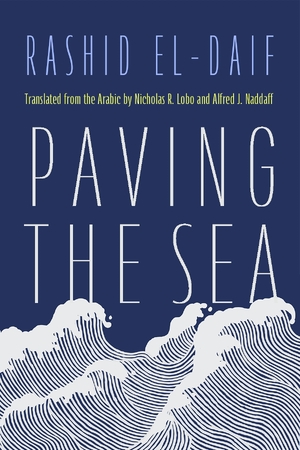
What does it take to build a modern nation—and what happens when that project fails? By turns wryly absurd, unsettling, and deeply moving, Rashid El-Daif’s novel Paving the Sea narrates a quest for the impossible and the disillusionment with the transformative promises of the nation. At the center of the story is Jurji Zaidan, the real-life intellectual giant of the Arab Nahda, the cultural renaissance that sought to remake the Arabic-speaking world through modern science and secular thought. Zaidan and his fictionalized friend Fares Hashem attend university where the two young idealists campaign to bring Darwin’s theory of natural selection into the curriculum. When their reward is expulsion, they depart provincial Mount Lebanon and Fares sets out for the West with grand ambitions. But the pursuit of enlightenment proves far more complicated than either imagined.
El-Daif tells this story with a sardonic narrator who comments freely on events, collapsing the distance between past and present, the Ottoman era and our own. The result is a work of historiographic metafiction that parodies the well-worn binary of East and West, tradition and modernity, while refusing to settle for either nostalgia or easy answers. A masterwork of contemporary Arabic literature, Paving the Sea brings wit and satirical intelligence to profound questions about migration, identity, and the universal desire to belong somewhere that may no longer exist.
About the Author
Satirist, linguist, professor, and novelist, Rashid El-Daif is one of the leading voices on the contemporary Arabic literature scene. He has published three collections of poetry and numerous novels that have been translated into more than fourteen languages. Described as the Arab world’s answer to Umberto Eco, his works represent a painful break with grand ideologies and grapple with the collapse of the initial project of Arab modernity. El-Daif teaches creative writing at the American University of Beirut.
Nicholas R. Lobo is a doctoral student in the Department of Middle Eastern and Islamic Studies at New York University. He earned his master’s in Islamic history at the University of Oxford and has worked for several years as an Arabic-English translator at the Arab Center in Doha, Qatar.
Alfred J. Naddaff is a Knight-Hennessy scholar and PhD candidate in the Comparative Literature Department at Stanford University. He earned his master’s in Arabic language and Near Eastern studies at the American University of Beirut and writes for various news publications.
October 2026