

This November, two new titles from Syracuse University Press explore the influence of Chicago’s method of television production and a unique case-study of one set of 19th Century illustrations.
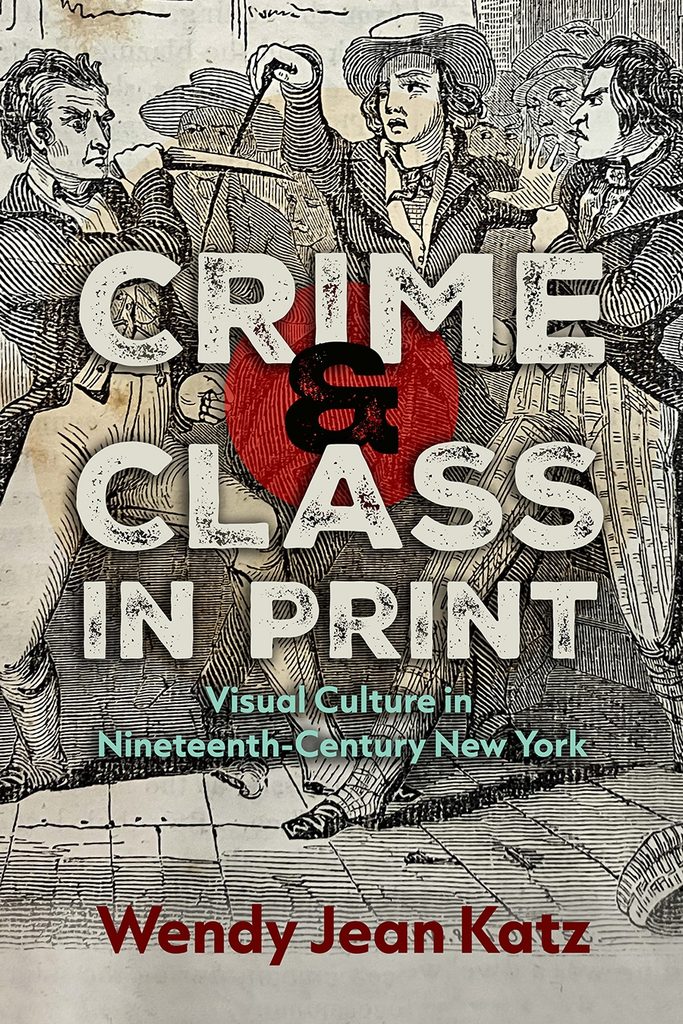
As newspapers and periodicals proliferated in the United States in the nineteenth century, editors seeking to carve out a large and loyal audience hired artists to pair vivid imagery with sensational fiction ripped from the headlines. In Crime and Class in Print, Wendy Jean Katz examines the emergence of a modern visual culture in pre-Civil War New York City around these illustrated stories of crime, swashbuckling, and ordinary and extraordinary characters both rich and poor. Katz documents the life and career of Tompkins H. Matteson (1813–1884), whose drawings were printed alongside these tales, to understand the mass production, reception, and circulation of serialized illustrations. By closely analyzing the images within both their historical and fictional contexts, she interrogates how these cheap, ephemeral periodicals dramatized urban crime but also framed it within class-based concerns.
This Came to You from Chicago explores the unique traits, style, and practices of “Chicago Television” from World War II to the 1990s. Jason J. Nebergall traces how, unlike mainstream stations, city-based broadcasters, who often worked day jobs, provided a platform for underrepresented groups to share their perspectives and allowed citizens to experiment with storytelling, representation, and engagement. In analyzing the idea and follow-through of “to and from Chicagoans,” Nebergall also illuminates how Chicago Television promoted civic engagement, fostered a sense of belonging and solidarity among residents, and contributed to the evolution of technological advances through the artistic risks of local and independent producers.
Explore all of our new titles at the link here.