
The 2026 Read New York Challenge is preparing for summer reads and May’s entry offers a warm and welcoming portrait of one Staten Island region.
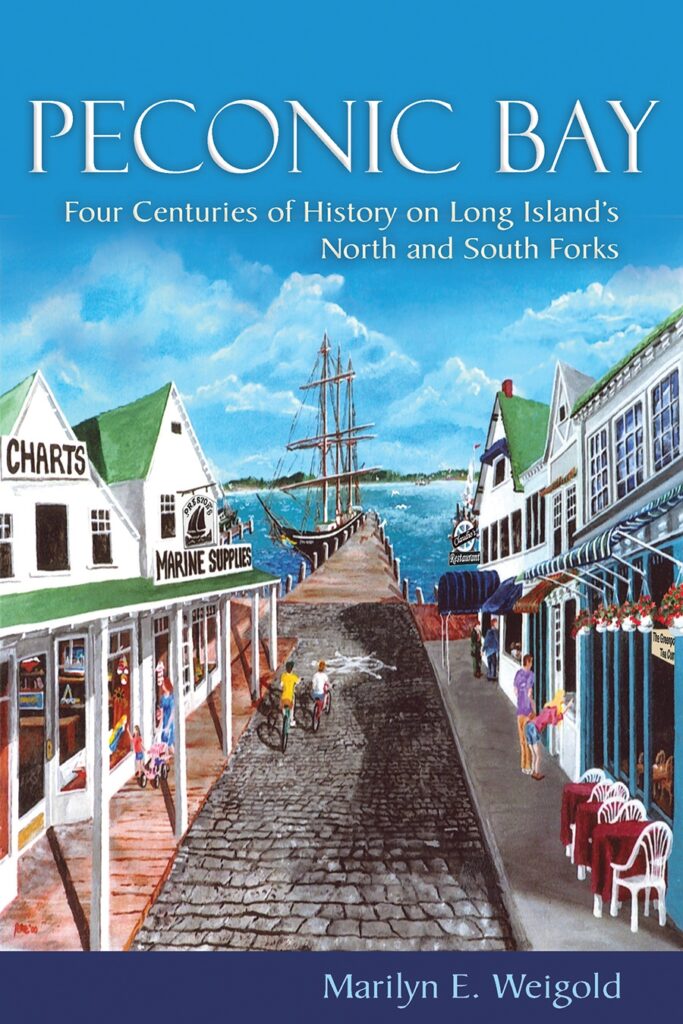
Only recently recognized for its economic and environmental significance, the Peconic Bay has a rich history, examined in Marilyn E. Weigold’s 2019 book, Peconic Bay: Four Centuries of History on Long Island’s North and South Forks. Peconic Bay examines the past 400 years of the region’s history, tracing the growth of the fishing industry, the rise of tourism, and the impact of a military presence in the wake of September 11. Weigold introduces readers to the people of Peconic Bay’s colorful history—from Albert Einstein and Captain Kidd, to Clara Barton and Kofi Annan—as well as to the residents who have struggled, and continue to struggle, over the well-being of their community and their estuarine connection to the planet. Throughout, Weigold brings to life the region’s rich sense of place and shines a light on its unique role in our nation’s history.
Peconic Bay was well received on release, including a review in Long Island History Journal, which highlighted Weigold’s attention to both the historical and economic shifts in the region and how residents adapted with the times to life in Peconic Bay. The review goes on to say, “Delving into the unique role that the East End of Long Island played in our nation’s history, the pages of this work bring to life the tales of Englishmen and Shinnecocks, of patriots and loyalists, farmers and fishermen as well as that of the working class, retirees, and the elite. Marilyn E. Weigold melds together fact and folklore to write a compelling history of the North and South Forks, which is not only factual but also fun.”
While the book is a nonfiction analysis, Weigold has also discussed what makes the region such a potent setting in fictional works. In a 2022 CrimeReads piece, Weigold was cited as to how the wealth make-up of the region and the generational history of some residents makes the location a prime setting for crime stories.
We’ll be discussing the book and the region at the end of the month as this month’s Read New York challenge selection. If you would like to read along with us, submit your thoughts by the end of this week for our roundup at the end of the month or find out how you can participate in the Read New York Challenge here.