

May is Jewish American Heritage month, offering an opportunity to celebrate the work of Jewish Americans. To celebrate, the press is offering a sale on all of our Jewish studies titles. Explore the selection and take a look at some recent applicable books here.
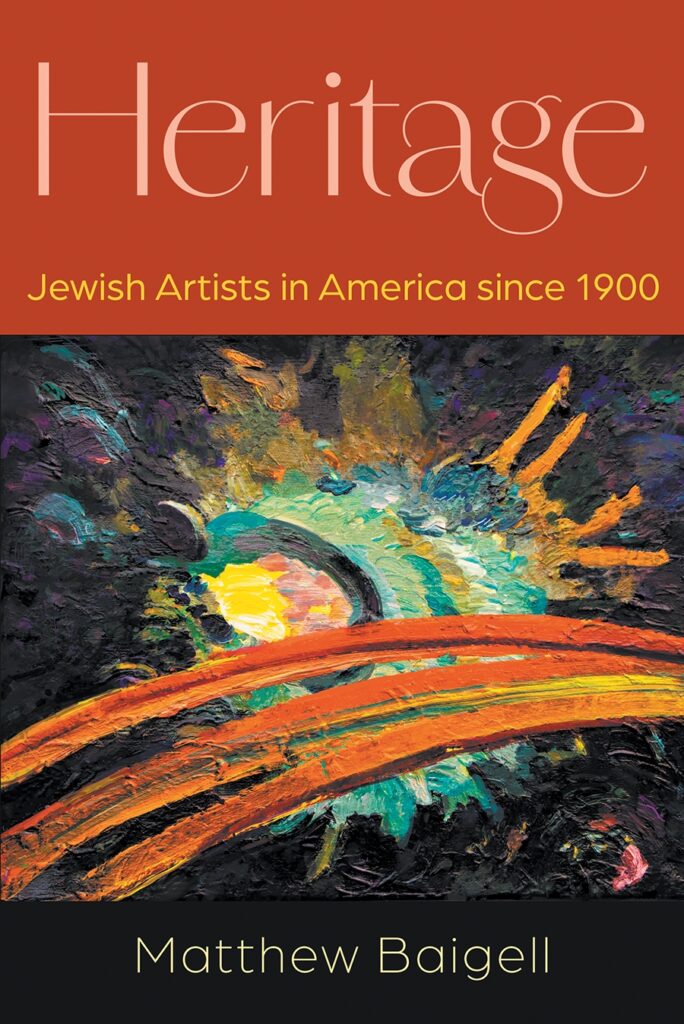
As millions of Jews immigrated to the United States from Eastern Europe starting in the 1870s, they brought with them not only their religious heritage but also a definitive idea of the place and value of art and aesthetics in society. These ideas, motivated by local customs, morality, and political and social interests, are clear in the work of twentieth-century Jewish artists such as Mark Rothko, Leon Israel, Max Weber, Saul Bernstein, and more. In Heritage: Jewish Artists in America since 1900, Matthew Baigell situates these artists in a uniquely Jewish context. Starting from the shared values and references that informed generations of work, Baigell explores a century of progress through that specific lens. Placing these artists in a focused and continuous history of their own, Baigell shows how Jewish art in America has been informed by national and political trends, how first-generation Jewish artists responded to the works of their predecessors and images from a world away, and how contemporary artists reckon with modern Judaism.
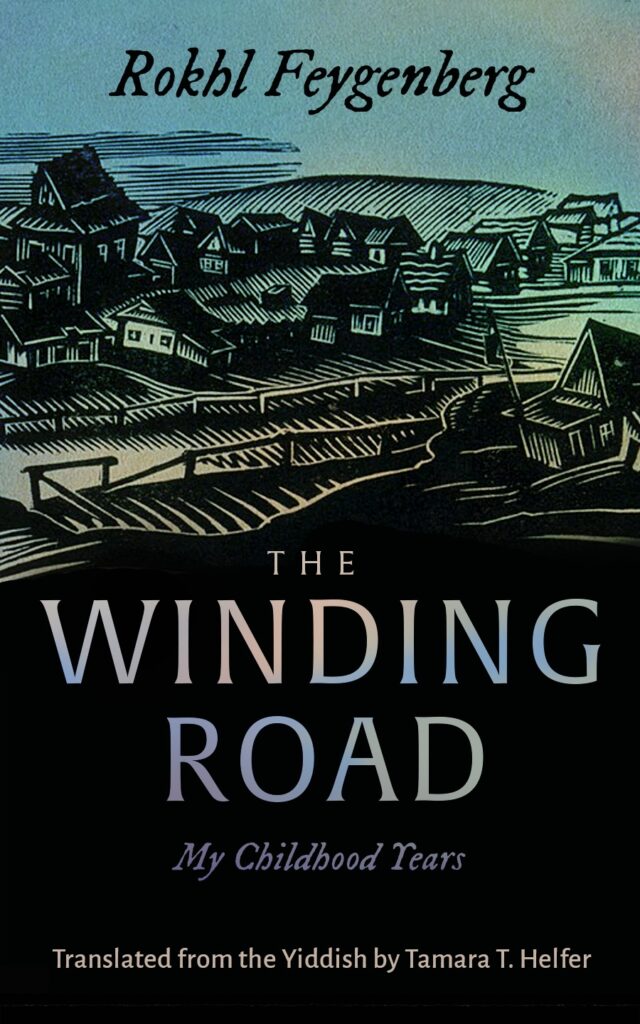
Rokhl Feygenberg became one of the youngest authors published in Yiddish when her autobiographical debut novel, originally called My Childhood Years, was released serially in 1905. This fictionalized account of her own rough childhood in a small Belarusian shtetl in the 1890s is framed by the deaths of her father when she was five and that of her mother when she was fourteen. Forced to provide and care for her family, the narrator finds escape through books and is inspired by them to invent an alternate fantasy life for herself, transforming the challenges of her everyday into a dreamscape world of city life and romance. In Tamara T. Helfer’s masterful translation, the narrator describes her fictional village of Bulin, deep in wild swampland and forests, far away from the world of books where she finds solace. Readers are enmeshed in the daily rituals of rural Jewish life, following the narrator through her long days of labor and caring for family. Her story, at times funny, at times full of pathos, is a clear-eyed description of youthful imaginings with three-dimensional, flawed characters, and vivid descriptions of everyday shtetl life.
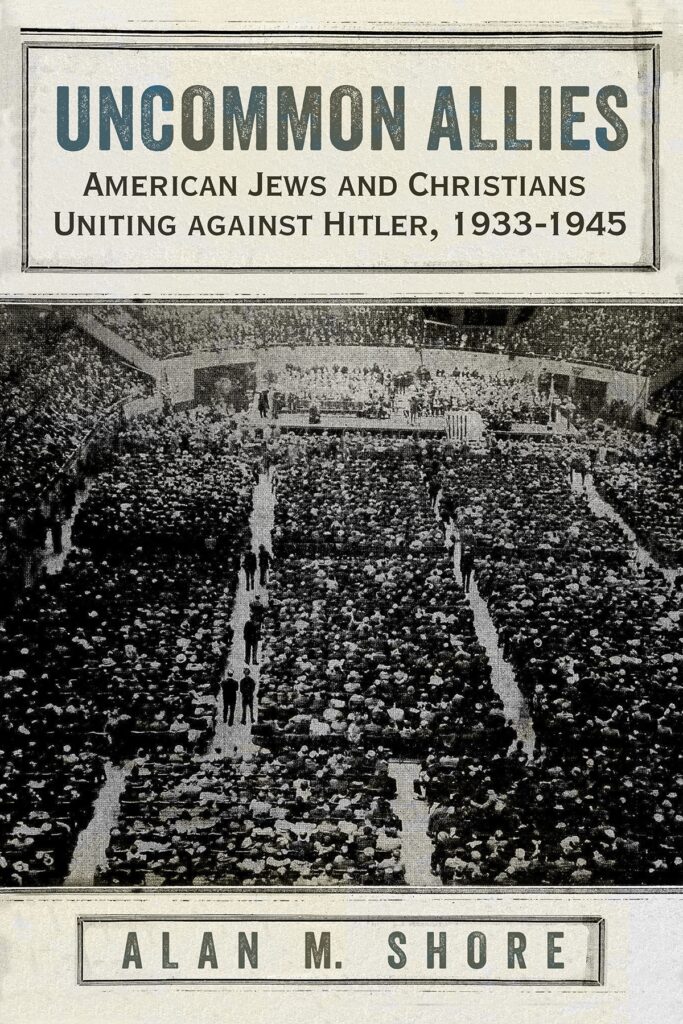
On March 27, 1933, representatives from across the American religious spectrum came to Madison Square Garden, united in a shared purpose to speak out against the rise of fascism in Germany and Adolph Hitler’s seizure of power. This rally—the first of several held at the Garden before, during, and after World War II—represents an unexplored moment of Jewish and Christian relations, challenging assumptions about Christian leaders’ indifference to the Jewish plight and their guilt as the realities of the Holocaust came to light. In Uncommon Allies, Alan Shore uses an impressive range of primary and secondary sources, including English and Yiddish newspapers of the time and neglected histories of various religious organizations, to shine a light on these pivotal rallies.
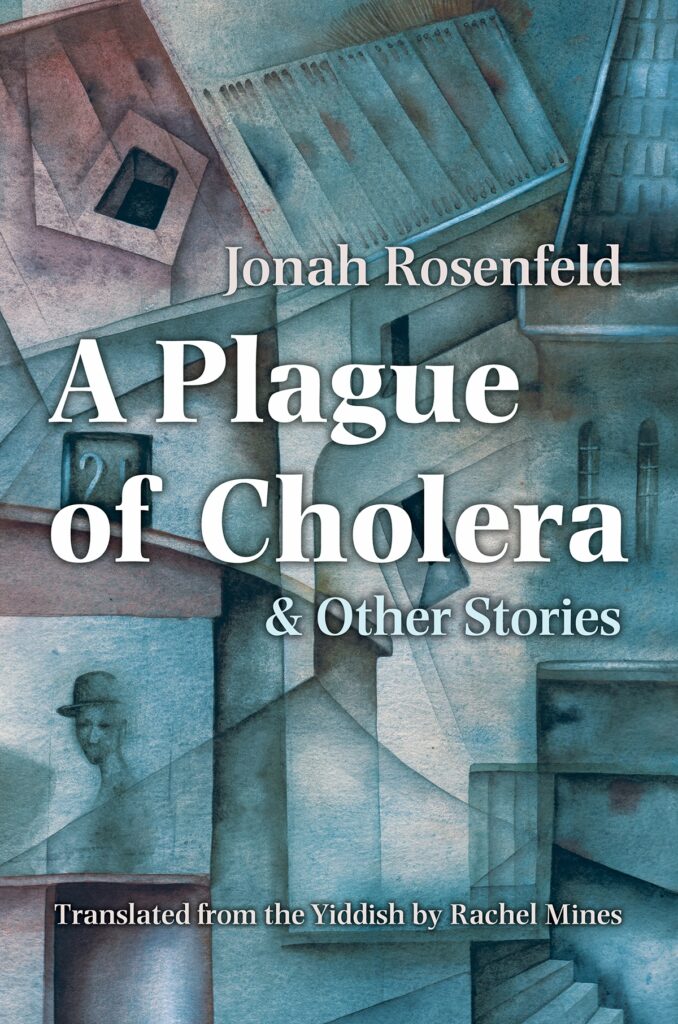
With his intense, quickfire psychological fiction and consistent portrayal of characters’ subconscious minds, Jonah Rosenfeld is a standout among Yiddish authors of the early twentieth century. In his dedication to observing human psychology, he frequently confronted issues rarely dealt with by his contemporaries. In A Plague of Cholera and Other Stories, Rosenfeld confronts the issues of his day, whether they be epidemics, differing social expectations for men and women, financial instability, or challenges to Jewish life at the beginning of the twentieth century. His themes are as relevant today as when the stories were first published. This new translation from the original Yiddish is culled from anthologies spanning Rosenfeld’s career, starting in 1924 and running through 1959 and contextualized alongside Rosenfeld’s biography and other writings. These short stories are presented in a fresh, approachable way, welcoming to students as well as seasoned readers of Yiddish texts and translations.
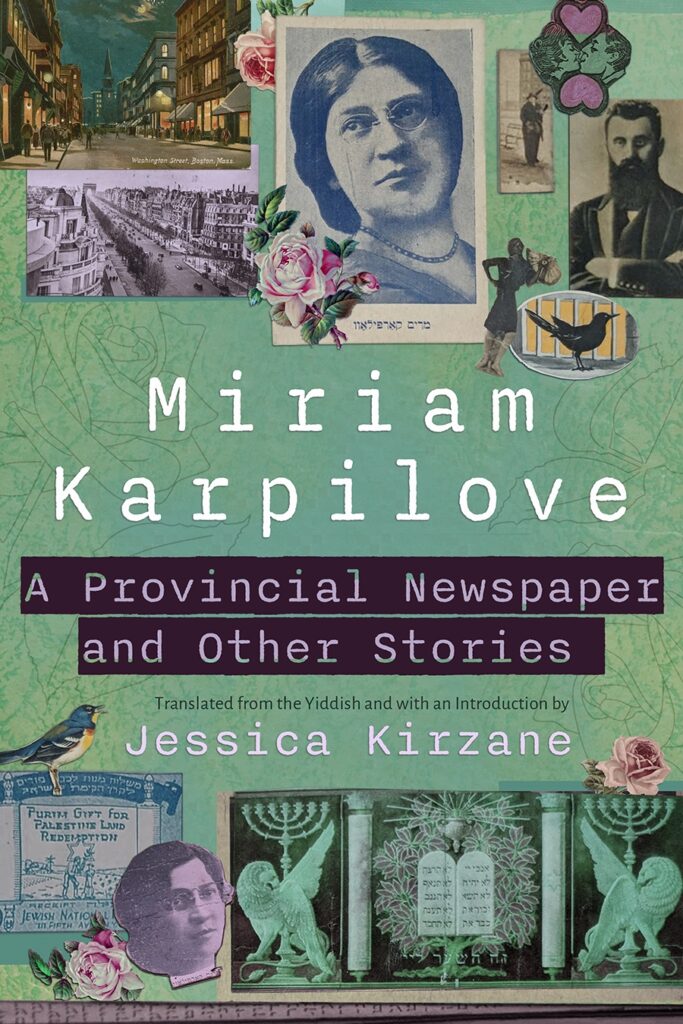
When the young narrator of Miriam Karpilove’s A Provincial Newspaper leaves New York to work for a new Yiddish newspaper in Massachusetts, she expects to be treated with respect as a professional writer. Instead, she finds herself underpaid and overworked. In this slapstick novella, Karpilove’s narrator lampoons the gaggle of blundering publishers and editors who put her through the ringer and spit her back out again. Along with A Provincial Newspaper, this captivating collection includes nineteen stories originally published in Forverts in the 1930s, during Karpilove’s time as a staff writer at that newspaper. In the stories, we find a large cast of characters—an older woman navigating widowhood, a writer rebuffed by dismissive audiences, American-born Jewish girls unable to communicate with Yiddish-speaking immigrants, and a painter so overcome with jealousy about his muse’s potential lover that he misses his opportunity with her—each portrayed with both sympathy and irony, in ways unexpected and delightful.