
This week marks International Open Access Week, an opportunity for presses and the open access community to celebrate the democratization of information and look for new ways to collaborate in the publishing sphere. Syracuse University Press Director Catherine Cocks has written a guest post examining the press’ history with JSTOR’s Path to Open program and our approach to open access publishing in a changing publishing climate.
Happy Open Access Week! This year’s theme asks us to think about what it costs to make knowledge widely available. A lot of skilled labor and materials goes into producing a scholarly book and circulating it to interested readers—on average about $30,000, according to an influential study now a decade, a pandemic, and rising inflation old. Historically, university presses have covered their operating costs through a combination of book sales and university support.
But that business model, always difficult to maintain, meant many people couldn’t afford or couldn’t get their hands on books produced half a world away. The advent of the internet and e-books helped lower some barriers, but creating and maintaining reliable, secure, well-designed digital distribution and discovery systems are most definitely not cheap. While journals have turned to fee-based or subscription-based OA models, they don’t work for books, which are more expensive, more variable, and singular, not serial, productions.
What to do?
JSTOR’s Path to Open program is helping scholarly book publishers develop a sustainable OA business model. Back in January 2026, we announced that four SU Press books had just flipped from paid to open access as part of the ACLS/JSTOR Path to Open pilot. Launched in 2023 and now a regular program offered by JSTOR, Path to Open offers a sustainable way to make scholarly books freely accessible while covering the costs of production and distribution. (You can read about how it all works in my original post or in this JSTOR Insight Brief.)
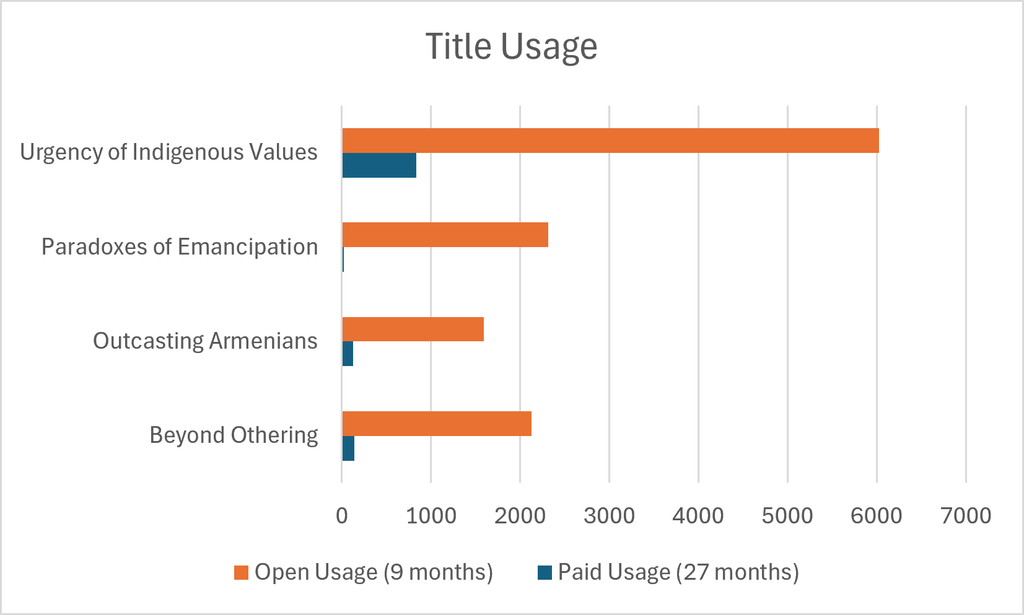
We had high hopes that these newly open books would quickly find new readers, and the reality is even better than we dreamed. The number of requests for our books on JSTOR’s platform soared immediately after the flip, and the trend has continued since then. The more data we get, the clearer the picture is.
Here’s a chart showing the increase in title usage—that is, the number of chapter downloads from JSTOR. (Figuring out how to track usage elsewhere is a big challenge.)
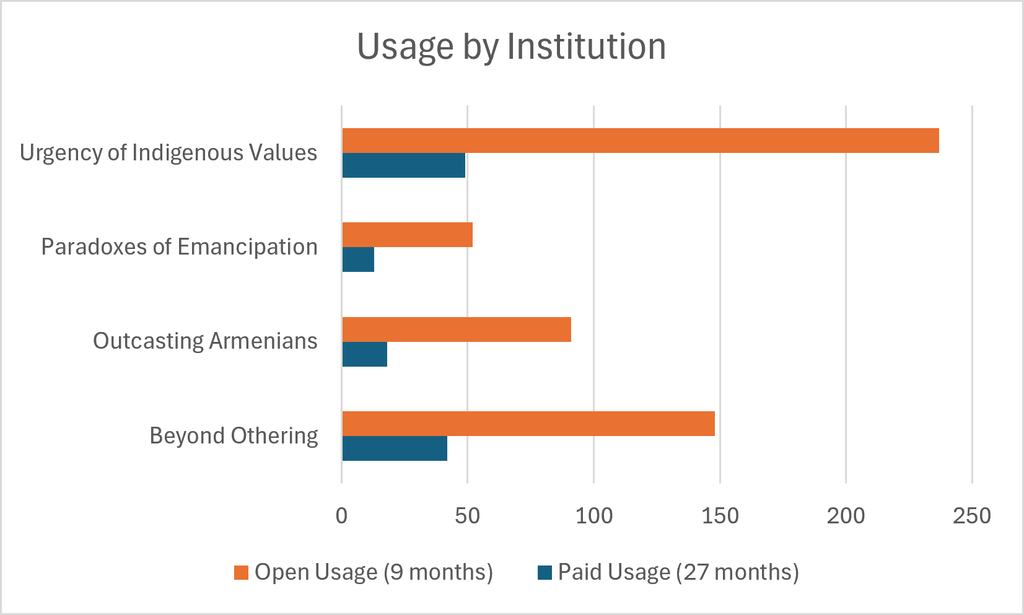
And it’s not just about the sheer increase in numbers. We’re also seeing usage from a much wider range of educational institutions, including public libraries, community colleges, and high schools, as well as non-affiliated users. Here’s what that looks like:
We were particularly delighted to see the vast geographic expansion in usage, as many of our authors are based outside the United States and the United Kingdom and write for and about people around the world:
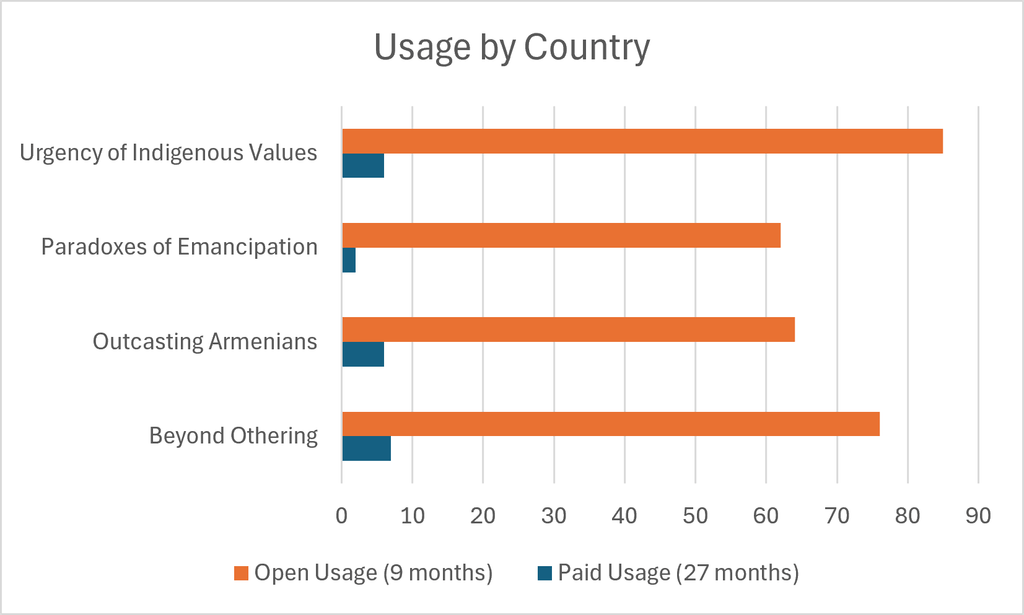
It’s important to emphasize that the paid access—the blue bars—covers a period of twenty-seven months (two and a quarter years), from September 2023 to December 2025. The open access—the orange bars—covers just nine months, from January 2026 to September 2026.
These figures demonstrate that there is tremendous global demand for the scholarly books we publish. By collaborating with JSTOR, our fellow presses, and libraries around the globe, we can fulfill our mission to circulate knowledge widely while also supporting the skilled labor and complex systems required to publish and distribute it effectively.
The next set of Path to Open books, including four more SU Press titles, flips in January 2027. We can’t wait to see how many readers they will find.