
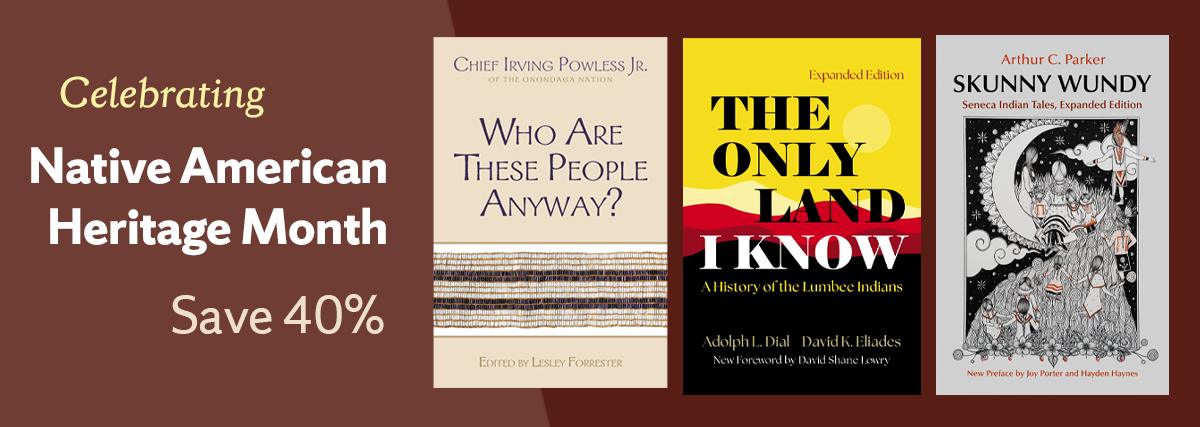
November marks Native American Heritage Month, an opportunity to celebrate the accomplishments and work of Native Americans throughout the nation’s history. To celebrate the occasion, Syracuse University Press is offering 40% off all of our Native American and Indigenous Studies titles from now until the end of November. Peruse all of the selections at the link here or take a look at some of our newest and most well loved applicable titles below.
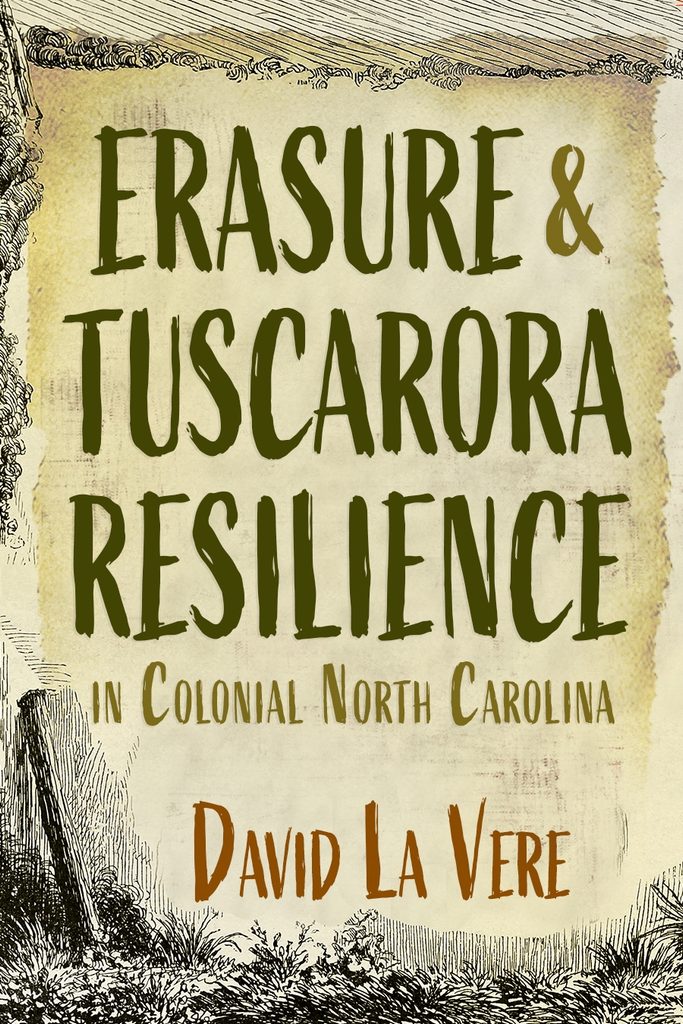
In the wake of their victory in the Tuscarora War (1711–15), English settlers forced the Tuscarora Indians of eastern North Carolina, along with the Meherrin, Core, Chowan, Mattamuskeet, Neuse, Hatteras, Bay River, and White Oak River Indians, to become colonial tributaries with assigned land reserves. As tributaries, these Native tribes had special duties and rights recognized by the colony, but they also had to navigate a new world thrust upon them by the colonial government and white settlers. In, Erasure and Tuscarora Resilience, historian David La Vere argues that through this devious sleight of hand, the colony erased these groups’ designation as “Indians,” eliding their official, documented existence.
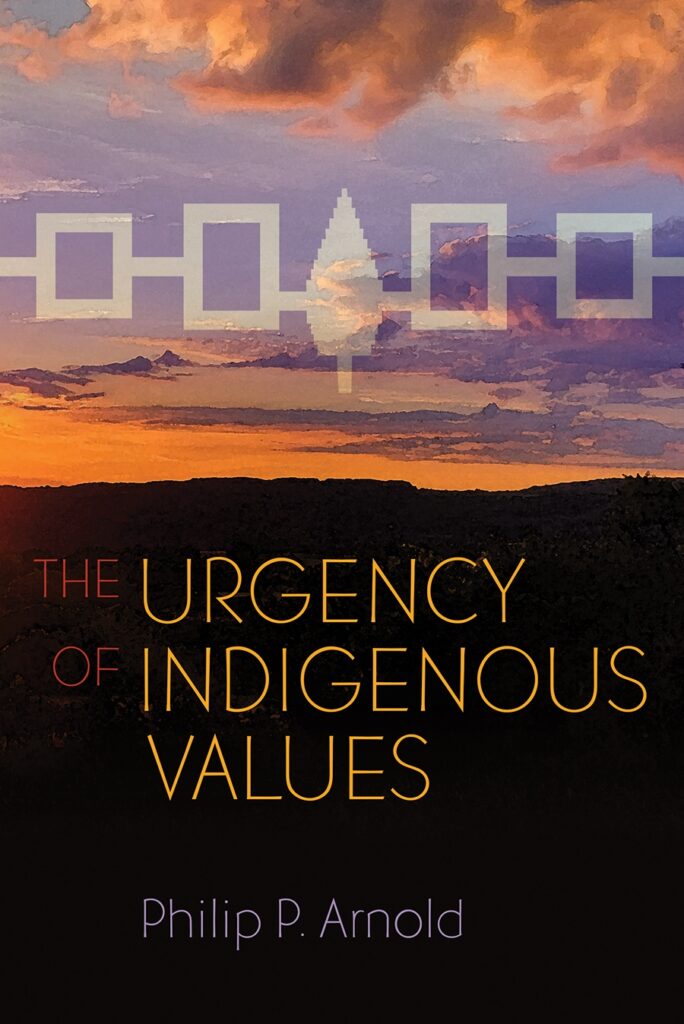
In The Urgency of Indigenous Values, author Philip Arnold utilizes a collaborative method, derived from the “Two-Row Wampum” (1613) and his 40 year relationship with the Haudenosaunee, in exploring the urgent need to understand Indigenous values, support Indigenous Peoples, and to offer a way toward humanity’s survival in the face of ecological and environmental catastrophe. Indigenous values connect human beings with the living natural world through ceremonial exchange practices with non-human beings who co-inhabit the homelands. Arnold outlines Indigenous traditions of habitation and ceremonial gift economies and contrasts those with settler-colonial values of commodification where the land and all aspects of material life belongs to human beings and are reduced to monetary use-value.
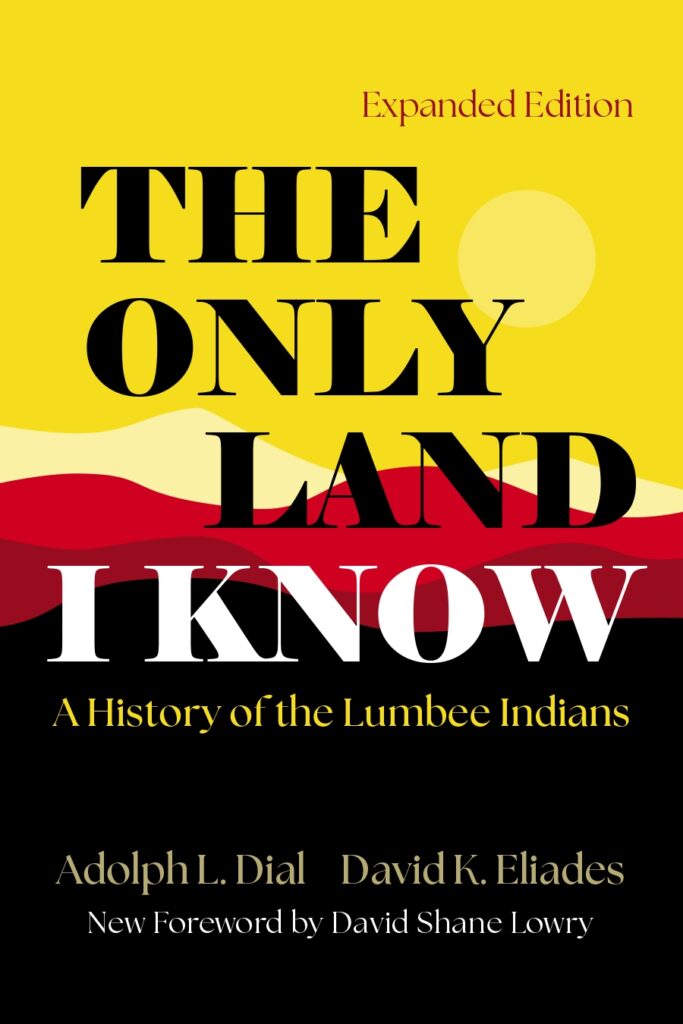
The Only Land I Know is a field-defining volume that follows the history of the largest Native American community east of the Mississippi River. In this essential work, Adolph L. Dial and David K. Eliades create a comprehensive and well-rounded history of the Lumbee people through 1974 by discussing the colonial period, the Revolutionary War, the Lowrie War, the Lumbee educational system, folklore, and more. With a new foreword by David Shane Lowry, the expanded edition encourages discussion about what it means to be a part of the Lumbee community. Lowry questions the truth of the book’s title as he traces the extensive history of travel and relocation of the Lumbee people, now primarily settled in southeastern North Carolina. Following the Lumbees’ success after a century-long push for federal recognition, The Only Land I Know is more important than ever as a glimpse into the history and culture of a resilient people that also reminds readers that the Lumbee community extends well beyond set geographical borders.
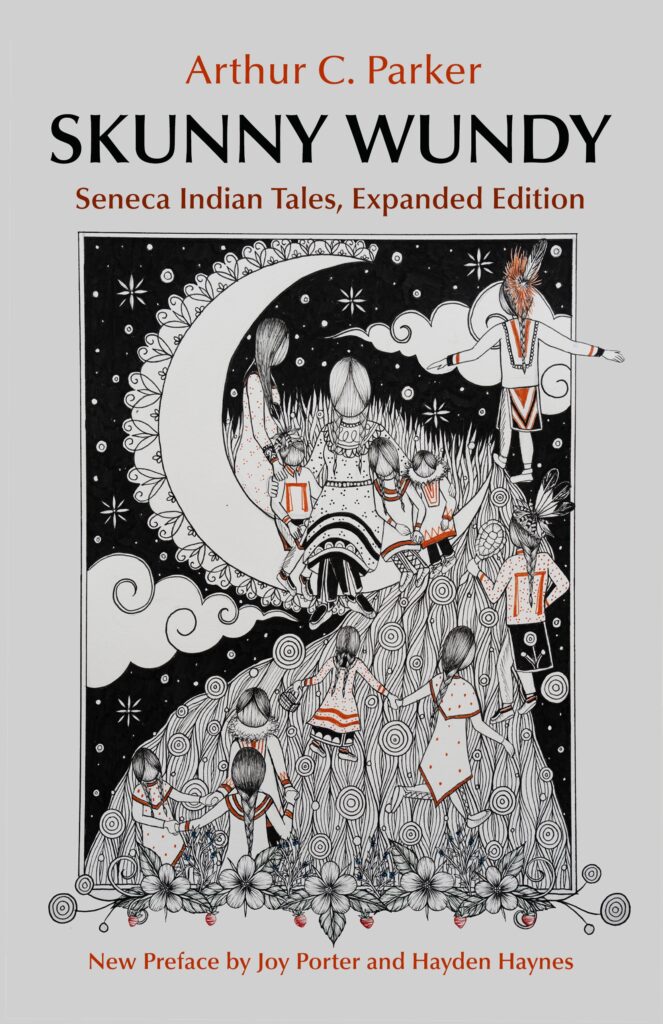
In the timeless collection Skunny Wundy, Seneca anthropologist Arthur C. Parker shares stories of wit, bravery, and wisdom, all told through a cast of animals who share the foibles and character flaws of humans. Readers learn that boastfulness and deceit cost Fox his friendships, that the red eyes of ducks signal the folly of wanting too much, and that even a kind nature cannot protect you from those who are mean and jealous. Growing up on the Cattaraugus Indian Reservation in western New York, Parker knew the importance of the storyteller. Oral narratives—whether myths, legends, or folktales—are more than just “stories.” They are the way by which a society communicates to its members the order and meaning to be found in the world around them. This expanded edition includes a new preface by Hayden Haynes and Joy Porter that places the collection in its full cultural and historical context, from Parker’s complex legacy to the enduring relevance of these tales as pathways to intercultural understanding and wisdom.