
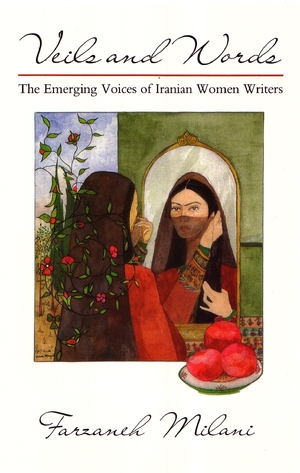
"Veils and Words beautifully interrogates the intersections of metaphor and practice, revealing the links between veiling, women's voices, and the emergence of modern Iranian literature."—Review of Middle East Studies
"The breadth and depth of her work is astounding, expansive, and extensive—a tour de force."—Shahla Haeri, author of No Shame for the Sun: Lives of Professional Pakistani Women
"Milani helps us understand how today’s Iranian women occupy a far greater space than ever in their changing society. This is a rare, complex, and much needed discourse that should help transform the perpetual Western gaze which continues to define Iranian women as pure victims."—Shirin Neshat, artist and filmmaker
Description
This is the first book, in any language, about women’s literary tradition in Iran. Veils and Words places this tradition in the context of social practices and cultural ideals, particularly those related to veiling and unveiling, silence and revelation.
For centuries, traditional propriety, Hojb-o-Haya or Sharm [charm/ shame], demanded a woman’s body be veiled, her voice go unheard, her life story remain untold. As a result, it was not until the mid-19th century that a tradition of women writers emerged in Iran.
The writers discussed here—especially Tahereh Qorratol’Ayn, Parvin E’tessami, Forugh Farrokhzad, Simin Daneshvar, Simin Behbahani, and Tahereh Saffarzadeh—represent 150 years of Iranian women’s literary expression ranging from lyric poetry and short stories to novels, from didactic and religious poetry to autobiographies. For unveiling body and voice, these pioneering women paid dearly with loss of reputation and allegations of immorality, lunacy, even heresy.
In studying Iranian women writers, Milani, herself an Iranian poet, draws from Western feminist literary criticism to concentrate on problems of authorship specific to women in a sexually segregated society. She writes about a group of writers not only marginalized in their own country but also excluded from the mainstream of Anglo-American attention to world literature—an exile writing about exiles.
About the Author
Farzaneh Milani is professor of Persian Literature and Studies in Women and Gender at the University of Virginia. She is the author of Words, Not Swords: Iranian Women Writers and the Freedom of Movement and the coeditor and translator of A Cup of Sin: Selected Poems by Simin Behbahani.
September 1992