
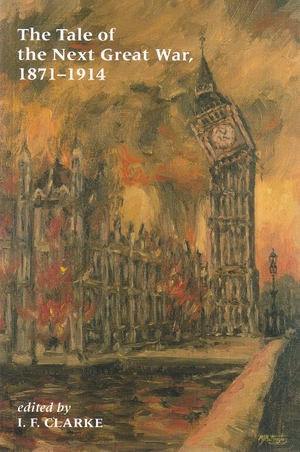
Description
This selection of short stories offers a return journey through the future as it used to be. Time speeds backwards to the 1870s—to the alpha point of modern futuristic fiction—the opening years of that enchanted period before the First World War when Jules Verne, H. G. Wells and many able writers delighted readers from Sydney to Seattle with their most original revelations of things-to-come. In all their anticipations, the dominant factor was the recognition that the new industrial societies would continue to evolve in obedience to the rate of change. One major event that caused all to think furiously about the future was the Franco-German War of 1870. The new weapons and the new methods of army organization had shown that the conduct of warfare was changing; and, in response to that perception of change, a new form of fiction took on the task of describing the conduct of the war-to-come.
Table of Contents
Introduction: The Paper Warriors and their Fights of Fantasy, I. F. Clarke
The Battle of Dorking: Reminiscences of a Volunteer (1871), General Sir George Tomkyns Chesney
The Battle of Dorking (1871), Anonymous
Der Ruhm; or, The Wreck of German Unity. The Narrative of a Brandenburger Hauptmann (1871), Anonymous
La Guerre au Vingtiéme Siécle (1887), Albert Robida
The Taking of Dover (1888), Horace Francis Lester
In a Conning Tower: How I Took HMS Majestic into Action, Hugh Oakley Arnold-Forster
The Stricken Nation (1890), Hugh Grattan Donnelly
The Raid of Le Vengeur (1901), George Griffith
The Green Curve (1907), Major-General Sir Ernest Swinton
The Trenches (1908), Captain C. E. Vickers
The Secret of the Army Aeroplane (1909), A. A. Milne
The Unparalleled Invasion: Excerpt from Walt Nervin’s Certain Essays in History (1910), Jack London
A Vision of the Future (1912), Gustaf Janson
‘ ’Planes!’ (1913), Frederick Britten Austin
Danger! Being the Log of Captain John Sirius (1914), Sir Arthur Conan Doyle
Frankreichs Ende im Jahr 19?? (1914), Adolf Sommerfeld
Bibliographical Notes
Biographical Notes
About the Author
I.F. Clarke is a former professor of literature at the University of Strathclyde, Scotland.
6.125 x 9.25, 396 pages, 63 black and white illustrations
November 1995