
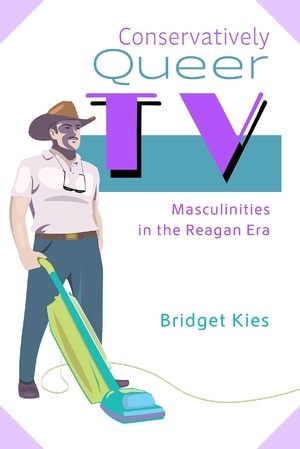
"Perfect for anyone interested in the intersections between masculinity studies, queer studies, and television studies, Conservatively Queer TV reexamines Reagan-era television as a means of critiquing the 1980s domestic sitcom, reconsidering the male TV action hero, and analyzing queer and gender parody on Saturday Night Live."—Sarah E. S. Sinwell, associate professor and director of graduate studies, The University of Utah
"Conservatively Queer TV invites us to rethink the television of the long 1980s beyond familiar accounts of Reagan-era conservatism and macho masculinity. Kies traces how mainstream programs created space for gender play, queer viewing, and alternative forms of masculinity, showing how television helped bridge the sexually liberated 1970s and the more openly LGBTQ representations of the 1990s."—Ron Becker, author of Gay TV and Straight America
"Conservatively Queer TV rewrites the cultural memory of 1980s television. Rather than treating the Reagan era as simply a period of macho backlash and conservative retrenchment, Kies uncovers the gender play, queer reception spaces, and alternative masculinities hiding in plain sight across popular TV."—Julia Himberg, Author of The New Gay For Pay: The Sexual Politics of American Television Production
Description
Conservatively Queer TV is a cultural history of televisual masculinities in the long 1980s, a period in which vestiges of 1970s sexuality, feminism, and queerness persisted in a state of tension with Reagan-era conservative values and regressive machismo. Bridget Kies traces how television executives and producers of the era created images of queer and contested masculinities across mainstream programming to target women viewers and experiment with television genres and forms in the burgeoning cable era. Consequently, this period gave American television a dynamic contrast between forms of masculinity being touted as virtuous in political and religious discourse and on-screen portrayals of men as trauma survivors, domestic laborers, and drag performers.
Kies uses feminist methodologies to examine television’s queer and contested masculinities to shed light on missing pieces of television history. Specifically, she explores how feminism and anti-feminist anxieties shaped televisual images of masculinities and the construction of audiences by executives and producers.
Conservatively Queer TV goes beyond current studies of explicitly gay material that often look at how the television industry responded to the HIV/AIDS crisis across the 1980s and instead demonstrates how Reagan-era values, feminism, and queerness collided to create a dramatic reconstruction of seemingly normative American masculinities.
About the Author
Bridget Kies is an assistant professor in the film studies and production program and the assistant director of the women and gender studies program at Oakland University. She is the author of Murder, She Wrote, coauthor of Teaching AI in Film and Media Studies, and coeditor of Fandom, the Next Generation.
April 2027