
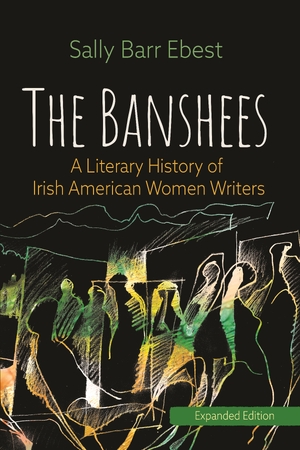
"The Banshees will undoubtedly resonate with the women who are reading and writing in the twenty-first century. It will be intriguing to watch how Irish-American women receive it, and how they use it to make and remake themselves."—New Hibernia Review
"This insightful volume will appeal to students of Irish literature, feminism, and twentieth-century American sociopolitical history."—Library Journal
"A celebration of the work of the Irish American women writers we know and a recovery of the work of the many talented writers whose work is either less well-known or has been lost."—Eamonn Wall, author of Writing the Irish West: Ecologies and Traditions
Description
Although much has been written about American feminism and its influence on culture and society, very little has been recorded about the key role played by Irish American women writers in exposing women’s issues, protecting their rights, and anticipating, if not effecting, change. Like the mythical Irish banshee who delivered forewarnings of imminent death, Irish American women, through their writing, have repeatedly warned of the death of women’s rights. These messages carried the greatest potency at liminal times when feminism was under attack due to the politics of civil society, the government, or the church.
The Banshees traces the feminist contributions of a wide range of Irish American women writers, from Mother Jones, Kate Chopin, and Margaret Mitchell to contemporary authors such as Gillian Flynn, Jennifer Egan, and Doris Kearns Goodwin. To illustrate the growth and significance of their writing, the book is organized chronologically by decade. Each chapter details the progress and setbacks of Irish American women during that period by revealing key themes in their novels and memoirs contextualized within a discussion of contemporary feminism, Catholicism, Irish American history, American politics, and society. The Banshees examines these writers’ roles in protecting women’s sovereignty, rights, and reputations. Thanks to their efforts, feminism is revealed as a fundamental element of Irish American literary history. The expanded edition includes a new afterword by the author that considers the first quarter of the twenty-first century.
About the Author
Sally Barr Ebest is a professor emerita in the Department of English at the University of Missouri–St. Louis. She is the author of Irish-American Catholic Women Writers vs. the Church: Resisting Lives as well as co-editor of Reconciling Catholicism and Feminism? Personal Reflections on Tradition and Change and Too Smart to Be Sentimental: Contemporary Irish American Women Writers.
February 2027