"[Katz] has managed to take an obscure and relatively unknown serial and its novel adaptations and weave a fascinating study of the relationship of the narrative’s illustrations and illustrators into a larger analysis of the art history and popular media marketplace in the mid-nineteenth century."—Cynthia Lee Patterson, author of Art for the Middle Classes: America’s Illustrated Magazines of the 1840s
Description
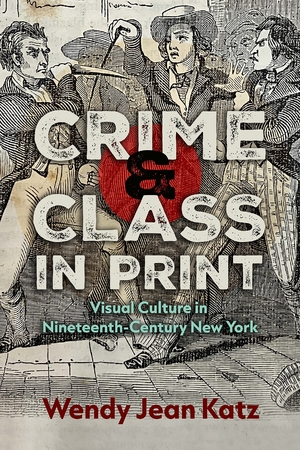
As newspapers and periodicals proliferated in the United States in the nineteenth century, editors seeking to carve out a large and loyal audience hired artists to pair vivid imagery with sensational fiction ripped from the headlines. In Crime and Class in Print, Wendy Jean Katz examines the emergence of a modern visual culture in pre-Civil War New York City around these illustrated stories of crime, swashbuckling, and ordinary and extraordinary characters both rich and poor. Katz documents the life and career of Tompkins H. Matteson (1813–1884), whose drawings were printed alongside these tales, to understand the mass production, reception, and circulation of serialized illustrations. By closely analyzing the images within both their historical and fictional contexts, she interrogates how these cheap, ephemeral periodicals dramatized urban crime but also framed it within class-based concerns.
The serial nature of Matteson’s illustrations, which made the coupled stories accessible to a larger swath of readers, represented an investment in industrial progress necessary to reach “mass” audiences. As Katz explores, while the images of city life conveyed nuance regarding ethnicity, temperance, police powers, privacy, sex, labor, aesthetics, reading practices, and masculinity, their paired narrative texts frequently mutated within and across different periodicals and languages to suit their audiences. In the English-language press, Matteson’s illustrations highlighted class struggle yet entwined them within the jingoist politics that advocated against immigration and upheld the white working class in opposition to ethnic diversity. As meaning shifted from one story, newspaper, or language to the next, what was a visual demonstration of progressive values championing proletariat interests became a platform to enforce a petit bourgeois and nativist perspective.
About the Author
Wendy Jean Katz is professor of art history at the University of Nebraska–Lincoln. She is the author of several books on nineteenth-century New York artists and their reception in the popular press, including A True American: William Walcutt, Nativism, and Nineteenth-Century Art and Humbug! The Politics of Art Criticism in New York City’s Penny Press. She has also written on seventeenth-century Anglo-American portraits, African American art, world fairs, regionalism, and Walt Whitman.