
"Ostby’s prose and politics are precise, detailed, balanced, and widely informed. The global circulation of poetic genres and literary crafts she makes theoretically visible form an archival evidence at the service of a caring and competent literary theorist. Reading her book from the trenches of my own battles, I was all smiles and gratitude! An absolute must read for the emerging generation of literary scholars."—Hamid Dabashi, author of The Shahnameh: The Persian Epic as World Literature
"Excellent research, thoughtful textual analysis, and a dynamic approach to the study of Iranian literature in a global context. . . . Ostby’s research and exploration is unquestionably innovative and new."—Persis M. Karim, coeditor of Tremors: New Fiction by Iranian American Writers
"Ostby’s intervention deserves our attention due to the rich tapestry of current theory it weaves together: from deft use of continental philosophy and postcolonial theorists to a thorough treatment of recent scholarship on the Persianate, and for its fresh treatments of well-known favorites like Forugh Farrokhzad and Marjane Satrapi to engagements of newcomers such as Solmaz Sharif and Fatemeh Ekhtesari, among many others."—Levi Thompson, translator of My Heart Became a Bomb
Description
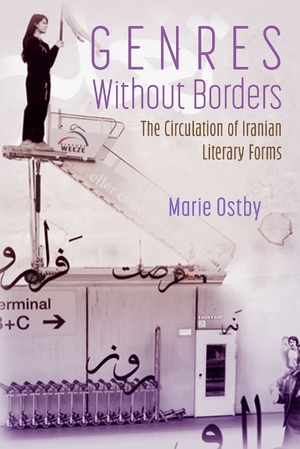
Literary cultures are inherently mobile, at times transgressing and disregarding, and at others reconstituting, cultural and national boundaries. Genres and literary forms, too, are vehicles for the mobility of ideas that strike chords in cultures and locales far from their origins. In Genres Without Borders, Marie Ostby examines modern and contemporary Iranian literature and the hybrid genres and innovative constructions it has taken to reveal how these tensile modes move and shift across transnational space.
Ostby argues that, despite censorship and political isolation, Iranian literature has thrived across borders through strategic transformations in genre and form that emerged in response to these very constraints. Drawing on travelogues, graphic narrative, and social media, alongside more traditional literary forms, such as the ghazal form, she traces the cross-border circulation that makes Persianate culture legible to global audiences while maintaining a distinctive voice. For the globally oriented Iranian writing she examines, the crossing of cultural boundaries is both mirrored and embodied in the crossing of genre boundaries, connecting these texts to a world literary culture despite accelerating political attempts to isolate them.
About the Author
Marie Ostby is an associate professor of English and global Islamic studies at Connecticut College. She is author of numerous book chapters and articles in New Literary History, PMLA, and Iranian Studies.
6 x 9, 354 pages, 32 black and white illustrations
September 2026