

2025 marked 200 years of the Erie Canal, a titanic work that dramatically reshaped the landscape of New York State and left its mark on the culture of the region. Over the last year, we’ve been highlighting the history of the canal, drawing from Syracuse University Press’ long history of publishing on the region. As the year draws to a close, we wanted to highlight some of the resources the last year of blog posts were drawn from for those wishing to further explore the stories and authors of the Canal.
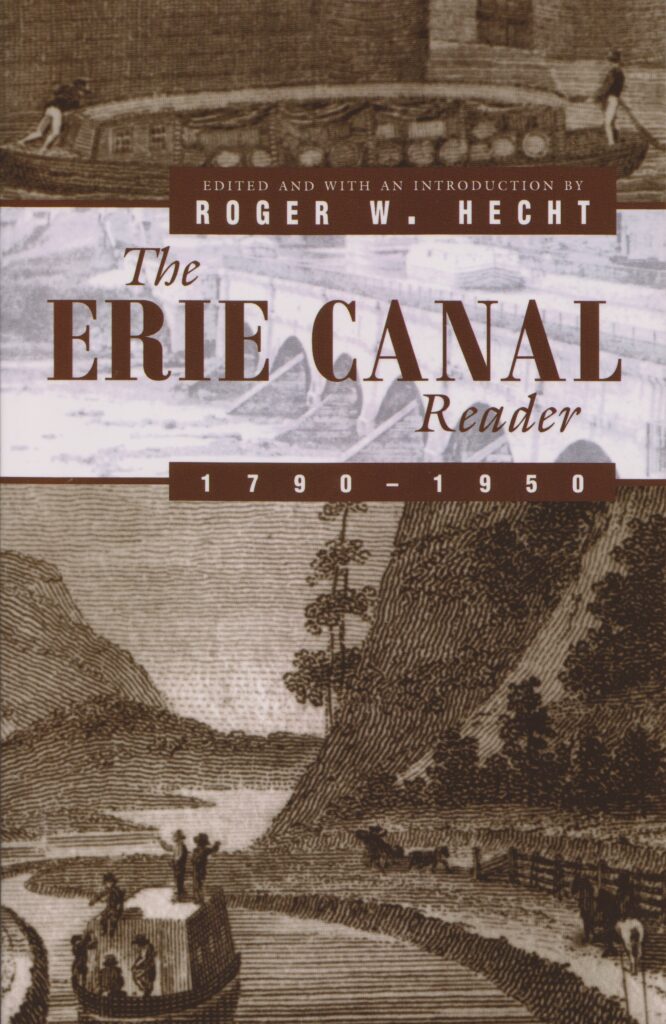
The Erie Canal Reader—poems, essays, travelogues, and fiction by major American and British writers—captures the colorful landscape and life along the Erie Canal from its birth in the New York frontier, through its heyday as a passage of culture and commerce, to its present decline into disuse. Part celebration of the men and women who worked its waters and part social observation, these writings by such figures as Basil Hall, Frances Trollope, Nathaniel Hawthorne, Harriet Beecher Stowe, Mark Twain, and others provide first-hand observations of the canal country and its role in the evolution of American social and economic culture from frontier to industrial prominence.
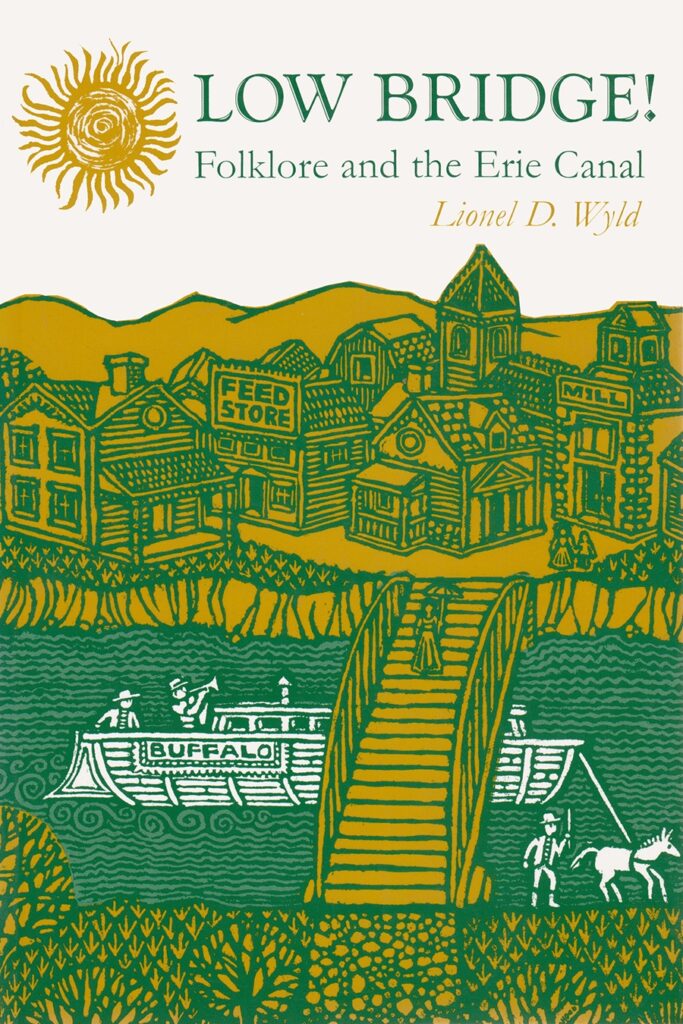
When the Erie Canal opened, it immediately became a tourist destination, with many visitors arriving, pen in hand, to document what they saw and the lives of the people they met. Low Bridge! Folklore and the Erie Canal surveys these writers, placing their pieces in context and history. Author Lionel D. Wyld blends canallers’ tall tales with accounts of lives on the water as well as newspaper reporting and other accounts, to give a grounded sense of life on the canal and the stories that sprung from it.

Richard Garrity grew up on his father’s boats on the Erie Canal in the early years of this century. From 1905 until 1916, when his father operated boats first in the lumber trade and later for gravel hauling, he was surrounded by the busy life of a now-bygone era in canal boating in Upstate New York. When the Barge Canal System opened in 1918, Garrity began a career that lasted until his retirement as a tug engineer in 1970. Canal Boatman: My Life on Upstate Waterways details many of Garrity’s memories working on the canal, the shifting culture, and the daily challenges of working on the boats. Garrity’s prose is lived-in and detailed, offering not only a peak at sailors’ working lives but also how they lived during harbor stops and with one another.
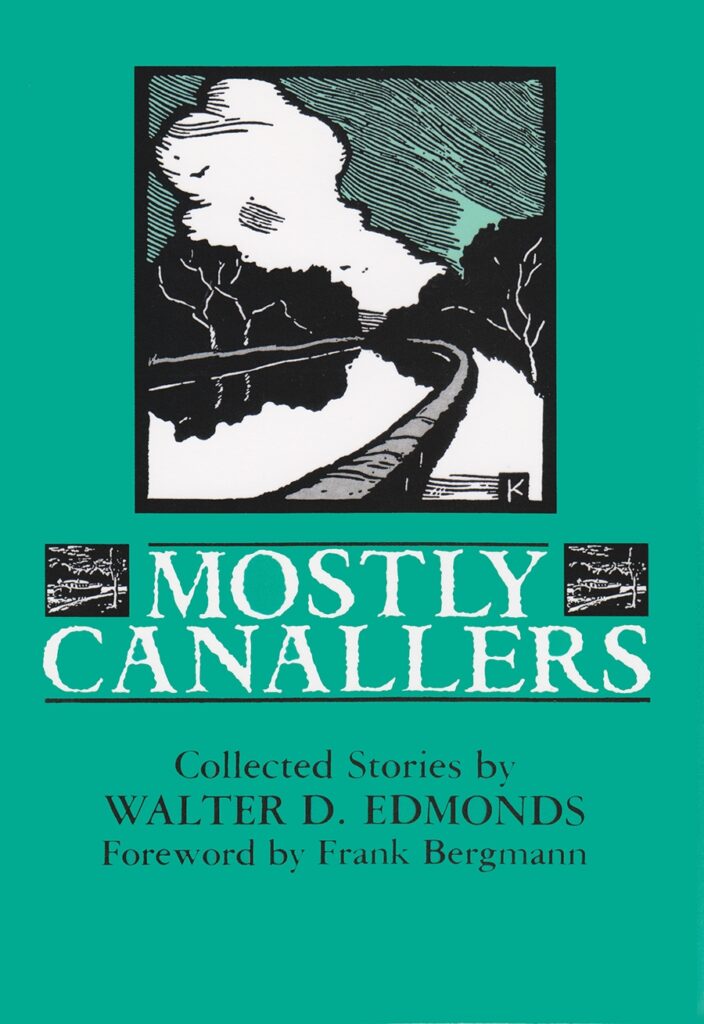
Edmund Wilson felt this collection of twenty-four stories in Mostly Canallers, originally published in 1934, contains some of Walter Edmonds’ best work. The Atlantic Monthly wrote that “Upstate New York has provided Edmonds with an inexhaustible store of characters one would like to know.” A number of the stories were award-winning and appeared in such collections as Best Stories of 1929 and The O. Henry Memorial Award Prize Stories. “Black Wolf,” The End of the Towpath,” Death of Red Peril”—these and ochers faithfully depict an era and region for which Edmonds became chief literary spokesman. Episodic and anecdotal, they catch in various ways something of the nuances of real life as it was in the days when the Erie Canal offered a passage west for many travelers and settlers and a livelihood for many more.