
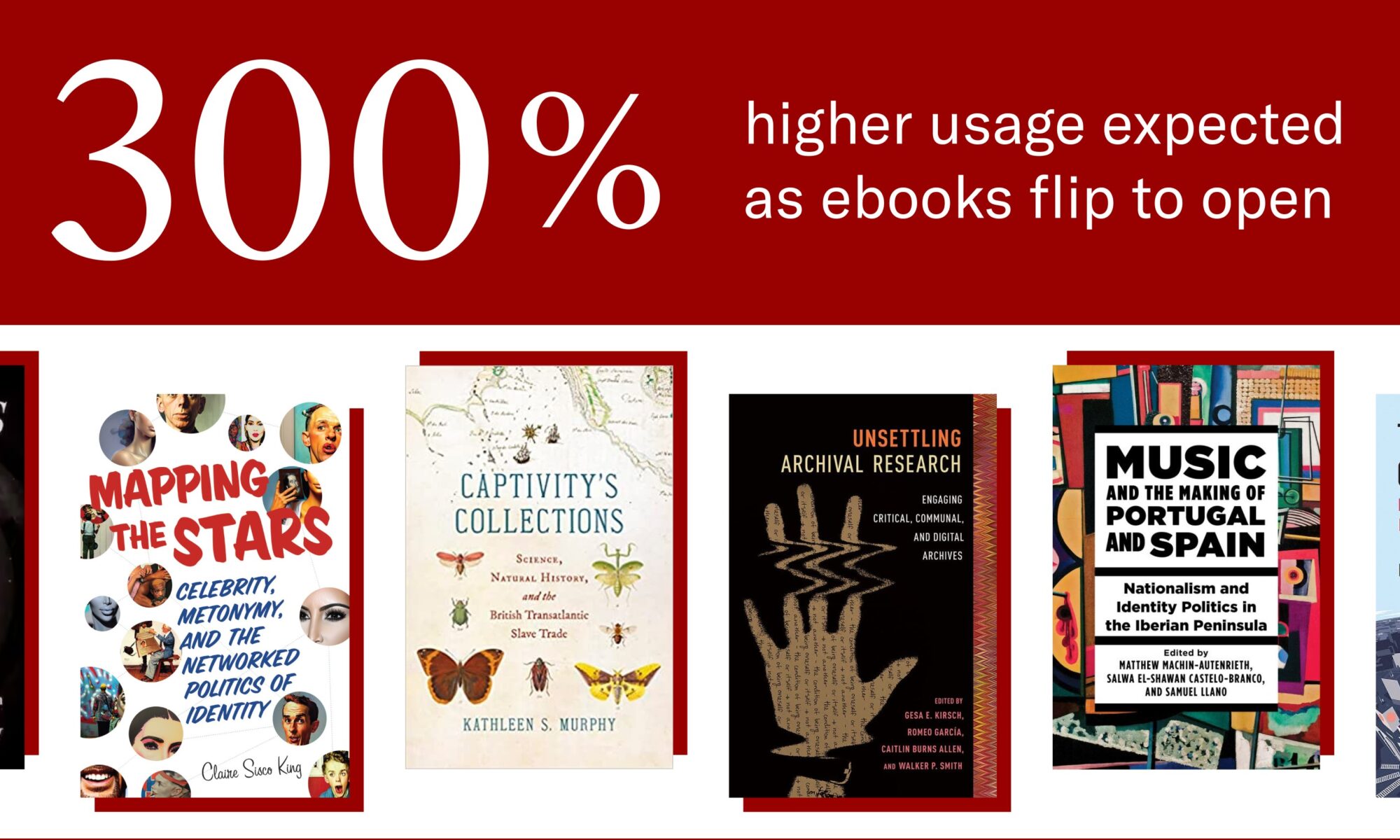
This week marks an important anniversary in the JSTOR Path to Open pilot program, which Syracuse University Press has taken part in. To mark the occasion and explain the significance of the program for our ongoing scholarship as well as to our publishing, Director Catherine Cocks has written a guest blog post.
This January, the first cohort of books in the Path to Open pilot flips to open after a three-year embargo. Four great SU Press titles are among them:
- The Urgency of Indigenous Values, by Philip A. Arnold
- Beyond Othering: A Gandhian Approach to Conflict Resolution in India and Pakistan, by Debidatta Aurobinda Mahapatra and Seema Shekhawat
- Paradoxes of Emancipation: Radical Imagination and Space in Neoliberal Greece, by Dmitri Soudias
- Outcasting Armenians: Tanzimat of the Provinces, by Taliyan Suciyan
In their first three years, these four books reached hundreds of readers at more than 40 institutions in seven countries through JSTOR and print and e-book sales. They have succeeded in reaching the scholars and students interested in the subject matter, exactly as we and the authors aimed to do. Two, The Urgency of Indigenous Values and Paradoxes of Emancipation, have been licensed for translation into German and Greek, respectively.
We’ve also been thrilled to hear from our authors about the success of the program and how Path to Open has allowed for a far greater reach for many books.
“I’m pleased that Outcasting Armenians: Tanzimat of the Provinces will join JSTOR’s Path to Open,” said Talic Suciyan, author of Outcasting Armenians. “For work that engages marginalized histories and silenced archives, open access is not just a publishing choice but an ethical one. Path to Open creates the conditions for critical scholarship to travel beyond privileged institutions and to reach readers, communities, and conversations that matter.”
“I am excited to see how extending the reach of my book, The Urgency of Indigenous Values, through Path to Open will increase its impact,” said author Phil Arnold. “My hope is that by making this work more easily available on a global scale will increase knowledge about the importance of the Haudenosaunee (Iroquois) and on the continuing contributions of Indigenous peoples for the future viability of the next seven generations.”
As pleased as we are, we also hope for much more now that these titles are free to all. Research shows that once academic books flip to open, vastly more people at more institutions and at no institutions and from far more countries read them. For example, one study published on the UKSG blog in 2021 reported that “OA books as a group have ten times more downloads than non-OA books and more than double the number of citations.” Two other takeaways from this study: “Books that contain the name of a country or region in their title generally show increased usage in that country or region” and about twice as many downloads come from individuals not affiliated with institutions. These findings all indicate that OA publishing is starting to achieve its goal of overcoming the existing inequities in access to scholarly works.
Because the news is so good, I can’t resist giving you more of it. When the University of Michigan Press compared usage of OA and gated humanities monographs on its Fulcrum platform, it found that “the total item requests per book of open access publications are 25 times more than restricted access versions,” and again, the readers came from a wider array of countries and often were not affiliated with institutions of higher education.
I’ll stop there, but a lot of research demonstrates the success of OA publications in reaching people around the world regardless of their connection to a university. SU Press has similar evidence from our SU Unbound titles, opened to all thanks to a National Endowment for the Humanities grant.
We expect great things of our Path to Open books in this new phase of their global circulation. Tune in later this year for a report!
References
“More Readers in More Places: The benefits of Open Access for scholarly books,” Cameron Neylon, Alkim Ozaygen, Lucy Montgomery, Chun-Kai (Karl) Huang, Ros Pyne, Mithu Lucraft, Christina Emery, UKSG Insights 34 (2021). DOI: 10.1629/uksg.558
“Visualizing the Impact of the University of Michigan Press Fund to Mission Initiative,” Zhenkun Lin and Kelsey Mrjoian, M Library Blog, May 23, 2023
“Open Access Week: The Demand for Accessible Scholarship,” Catherine Cocks, SU Press blog, October 20, 2025