
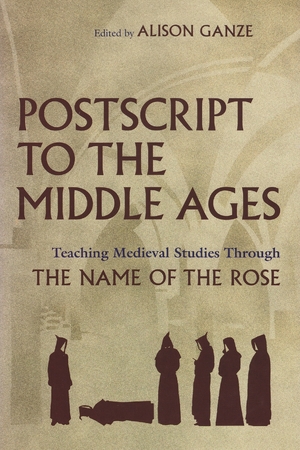
"The essays here synthesize the collective wisdom of a group of innovative professors."—Margaret Hallissy, author of A Companion to Chaucer's Canterbury Tales
"This lively and immensely useful collection underscores the enduring value of The Name of the Rose—nearly three decades after its publication—for teachers and students of the Middle Ages. Wide ranging in their approaches to Eco's novel, these essays demonstrate how this deeply learned fiction continues to inspire teaching and learning about the culture, history, and texts that it affectionately portrays."—Theresa Coletti, author of Mary Magdalene and the Drama of Saints
Description
More than a quarter century after its publication in English, Umberto Eco’s The Name of the Rose remains a popular novel among medievalists and nonmedievalists alike. Its riveting account of a series of murders at a wealthy Italian abbey during the papacy of John XXII, amidst the tensions of the Franciscan Spiritualist controversy, serves as an excellent point of entry to the cultural, philosophical, and theological milieu of fourteenth-century Europe. This collection of essays approaches the novel as a primary text in medieval studies courses and seeks to provide ways of integrating it into such courses effectively.
Part One of the collection addresses the pedagogical advantages and pitfalls of teaching The Name of the Rose in a variety of medieval courses, including literature, cultural studies, history, religious studies, art history, and manuscript studies. The scholarly essays in Part Two deal with major medieval historical figures, movements, and cultural phenomena as they pertain to the novel, including fourteenth-century apocalyptic traditions, reflections on medieval language and sign theories, and the search for the lost second book of Aristotle’s Poetics.
While each essay in the collection stresses its own disciplinary contexts and concerns, together they enrich each other, providing a valuable addition to the relatively small canon of texts on medieval pedagogy.
About the Author
Alison Ganze is department head and professor of English at Western Kentucky University. She is also the editor of Animal Languages in the Middle Ages: Representations of Interspecies Communication.
December 2009