
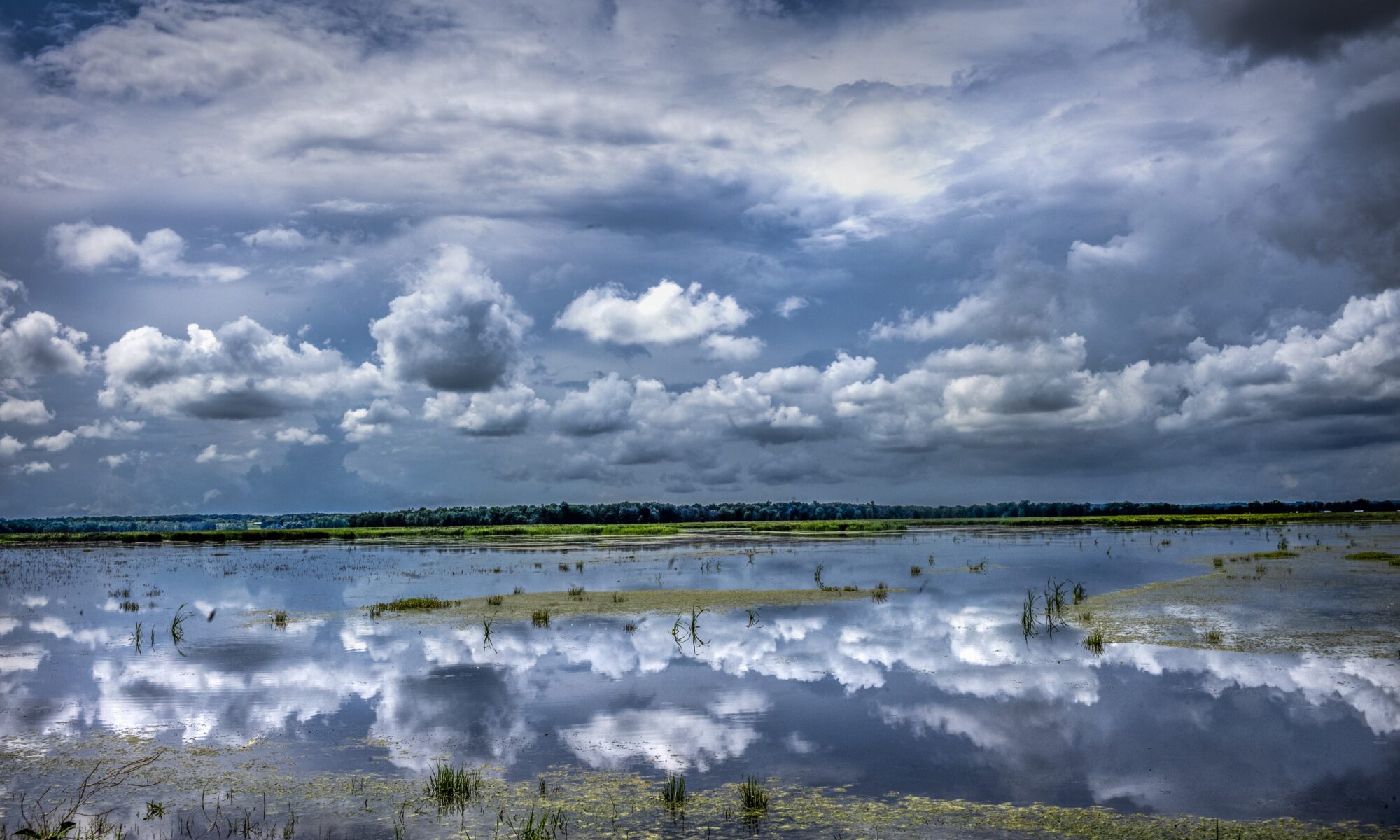
Below is excerpted from Wisdom of the Marsh: Modeling Restoration in the Montezuma Wetlands by Clare Howard and David Zalaznick, copyright 2026 by Clare Howard and David Zalaznick, published by Syracuse University Press.
Wetlands are fundamentally about democracy. They function with inclusivity, equity, and beauty. There is interdependence. The health of one sector influences the health of the whole. There are, inevitably, contested issues, but survival depends on recognition that science and beauty are co-sovereigns. Wetlands are much more than swamps, bogs, fens, marshes, and moors. They are ecological societies that operate with community, diversity, and justice. Almost never in our nation’s history has democracy faced greater challenges and the same can be said about wetlands.
“The struggle for democracy has to be maintained on as many fronts as culture has aspects: political, economic, international, educational, scientific and artistic, and religious,” John Dewey wrote.
He could have been writing about wetlands. Through science we begin to understand how wetlands function and how they are being destroyed. Through economics we understand wetlands are universal benefactors—part of the commons, shared by all, the air we breathe, the water necessary for life. Through politics, we understand an extractive policy to benefit some becomes a burden imposed on all. With cultural understanding, we learn about the destructive forces of colonialism, and we learn diversity is a strength, not a weakness. Through art, we elevate our vision beyond stereotypes to emotional bonds, mutual sustainability, and dimensional understanding. And religion helps us see beyond our own physical being, enabling us to bond with the needs of the whole. Solitary, meditative moments in wetlands can facilitate euterria, a secular sensation of becoming one with the environment, of feeling the molecules of nature seep into our bodies and add support to our physical bodies and our emotional well-being. We can feel the “Rights of Nature” is a constitution for universal survival.
The Rights of Nature is a growing international awareness that the environment has basic inherent rights just as humans do. Recognition that these two inherent sets of rights, nature and human, are intertwined helps illustrate the link between wetland preservation and preservation of a habitable world. Knowledge for surviving global climate change may depend on government regulations but may lie deep within the historical layers of muck in a vast swampy region of central New York.
The communal aspects of wetlands demonstrate that the most successful approach to combating climate change may start with seeing the beauty of the wetlands. Combating climate change is not all about spartan sacrifice, scarcity, discomfort, and duplicative layers of government oversight. It is not only about apprehensively watching wildfires engulf thousands of acres and blanket the woods in smoke. It may not start with the dread of increasing floods, droughts, and record high temperatures. Our most successful initial approach to combating climate change may come through learning to see beauty beyond stereotypes, protecting what is loved, and living inharmony and kinship. Wetlands can be loved and, in surprising ways, they love in return. That is the lesson taught by functioning wetlands.
Healthy wetlands epitomize the characteristics we most admire in people: they are strong, resilient, consistent, steadfast, fair, poetic, artistic, kind, and nurturing. Wetlands teach the value of the commons at a time when capitalism and neoliberal ideologies strip them for privatization and profit. The tragedy of the commons subverts justice, beauty, community, and spirituality for extractive monetary returns. The tragic history of wetland destruction mirrors the tragedy of the commons—stripping ecosystems for their component parts. The decision by the US Supreme Court in Sackett v. EPA did just that, failing to recognize that water is dynamic and interconnected even when there is no visual channel. We are all connected by the life pulse of water.
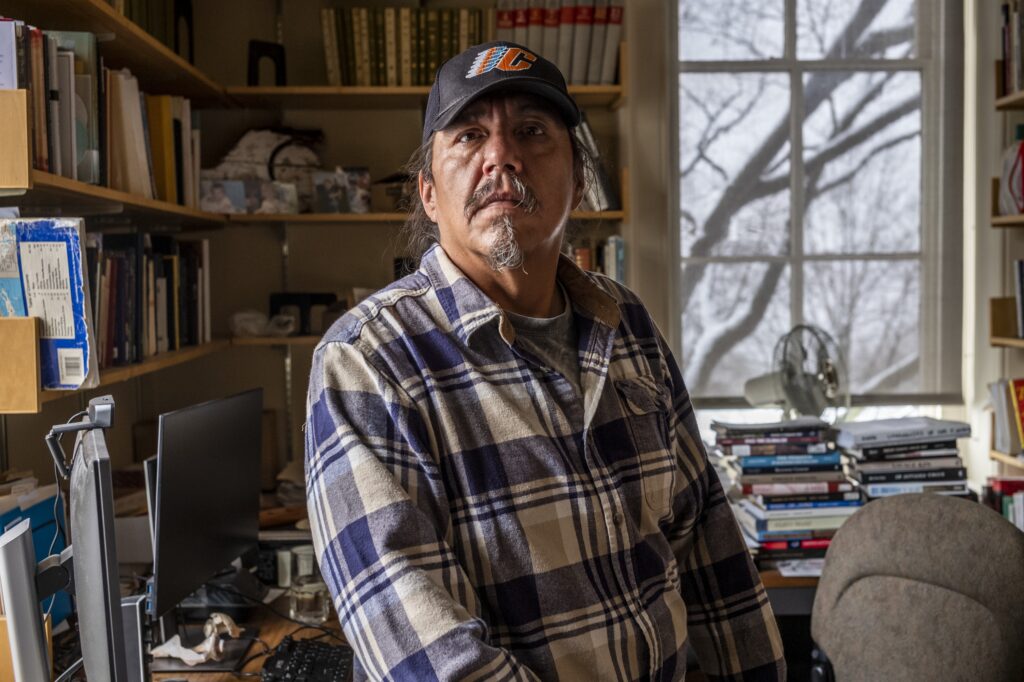
Wetlands can help us change the way we think. Indigenous societies were intimately connected with their environment and understood the value of the commons and the value of wetlands. In chapter two of his book, Stephen Henhawk, a member of the Gayogo̱hó꞉nǫʼ Nation, explains his ancestral connection to the vast wetlands on the shores of Cayuga Lake, a region the Gayogo̱hó꞉nǫʼ people called the Ojikeʼdágriʼgeh, the salt watery place. The region is now known as the Montezuma Wetlands Complex. Henhawk does not say that he is in kinship with this land; he is the land. Modern concepts of land ownership and capitalism are extractive while Indigenous societies understand wetlands are restorative. Indigenous societies understood wetlands cannot be separated from the environment or from all life on Earth. Everything is connected.
In our previous book, In the Spirit of Wetlands, Eliida Lakota, a Native American Lakota Sioux, shares her view of rivers, streams, and wetlands in terms of the philosophy of her culture. “I am in the river. The river is in me. The river is me,” she explains. She sees agency in trees, rocks, lakes, and streams. She intuitively practices Seventh Generation Thinking, evaluating her actions today and the impact they ill have seven generations into the future. That involves making decisions today based on information not yet known and on questions not yet asked. It is a way of thinking so alien to many in contemporary society that it is often dismissed out of hand as mystical, occult, or illogical. In reality, Seventh Generation Thinking is expansive and helps transition from the here and now to an embracing, sustainable future. We can approach Seventh Generation Thinking by employing the “precautionary principle,” making decisions based not only on the known world that is supported by research and science but on a likely or possible outcome. We can conclude pesticides linked to rashes, headache, nausea, and congestion may contribute to weakened immune systems even before clinical trials document the mechanism of causation. What is harmful for birds, wildlife, bees, and amphibians may likely be harmful for humans. The health of wetlands is intimately linked to the health of humans. The Rev. Martin Luther King Jr. said “What affects one affects all.” He was referring to discrimination and poverty but his words and wisdom can just as well describe a healthy, functioning ecosystem.
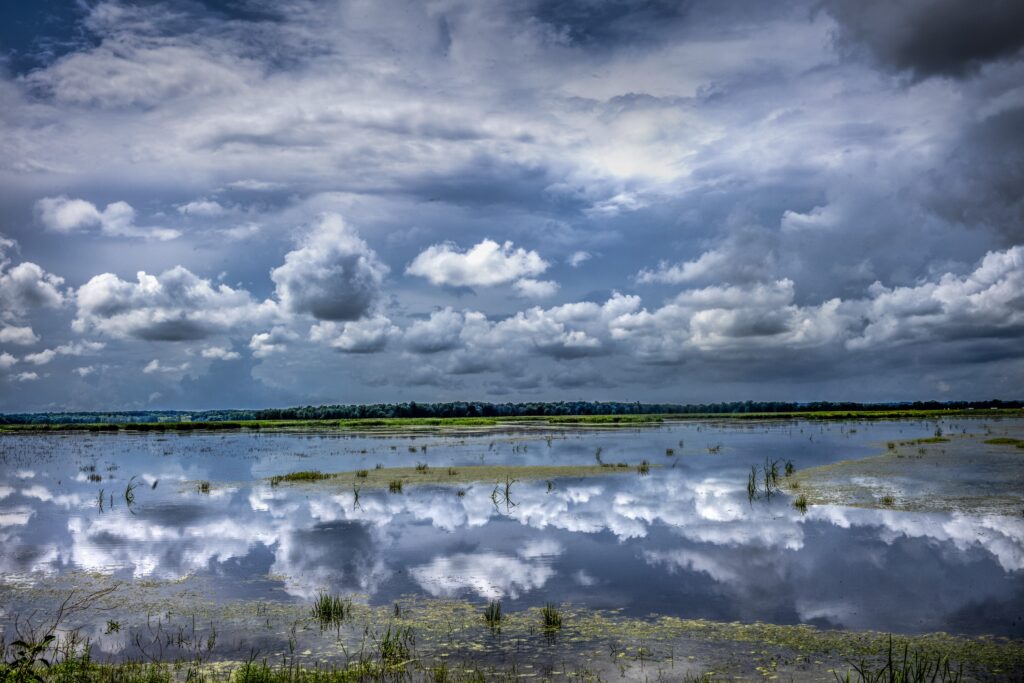
The photographs in this book freeze fleeting moments in time—providing the opportunity to reflect, analyze, ponder, visit, and question. These photos provide new windows into understanding wetlands. They challenge the stereotypic dismissal of wetlands as vast stretches of stagnant swamp, unproductive regions, or soggy fields of weeds. This selection of photos documents the beauty of the natural world, emotion, love, and the belief in the power of preservation and restoration. What may look like a photograph of watery landscape is, upon reflection, an image of wetland alchemy, of wetland magic. One volunteer at the Montezuma Wetlands Complex calls it “that Montezuma magic.”
Books about wetlands do not usually include photographs like those featured in this book. These photos are included here because wetlands communicate not only through science, but through beauty, love, inclusivity, justice, diversity, steadfastness. Through these images, statistics about declining bird populations clearly transition to a Rachel Carson Silent Spring alarm bell. The bird census numbers are not abstract; these photos put life into the numbers. So often, a scene is viewed fleetingly with eyes that saw stereotypes in the past, but when we view the same scene in a photo, there is a time to reflect and understand the intangibles behind the image. We are not merely creating a book about a geographic region in central New York. Our goal is to create a book that combines words and images that help change the way we see and think about the environment and our place in it. Our place in the environment is our legacy; it can be a legacy of extraction and exploitation or a legacy of restoration, preservation, beauty, and kinship.